Construction Job Lost Money: Did You Fix the Right Problem?
You Changed Something After the Last Job Lost Money. Did You Fix the Right Thing?
The argument doesn't cost you money. Changing the wrong thing does.
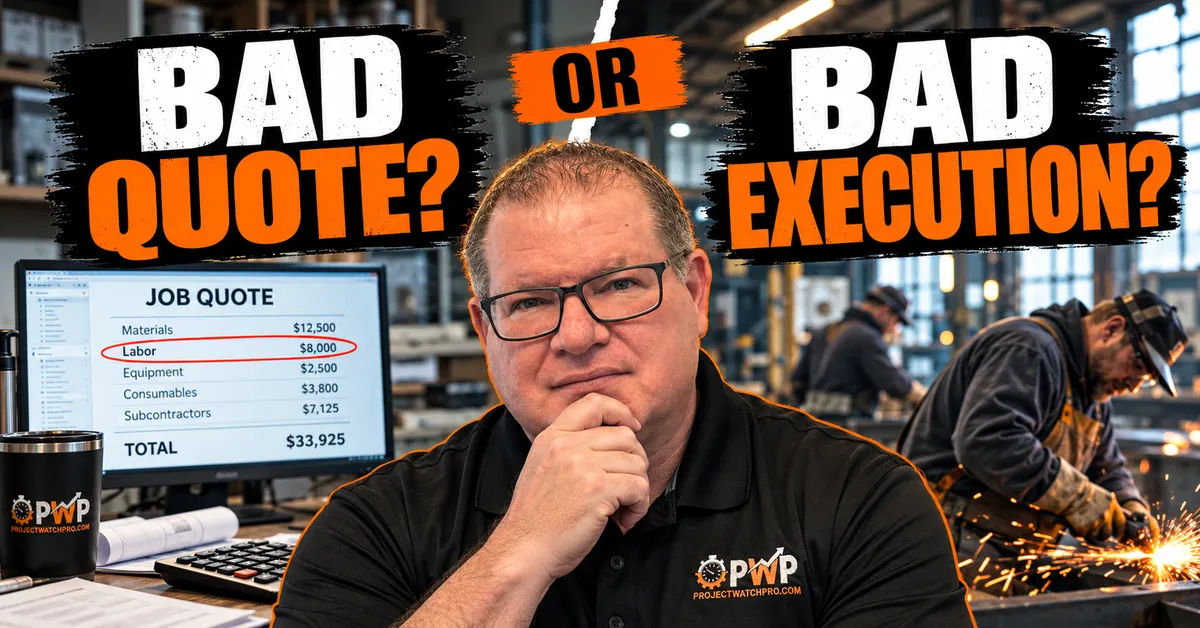
The last job lost money. The estimator says the field ran over. The foreman says the number was never right. You're stuck in the middle, tired of the back-and-forth, so you make a call. You change something.
The problem is not who was right. The problem is that changing the wrong thing makes the next job worse.
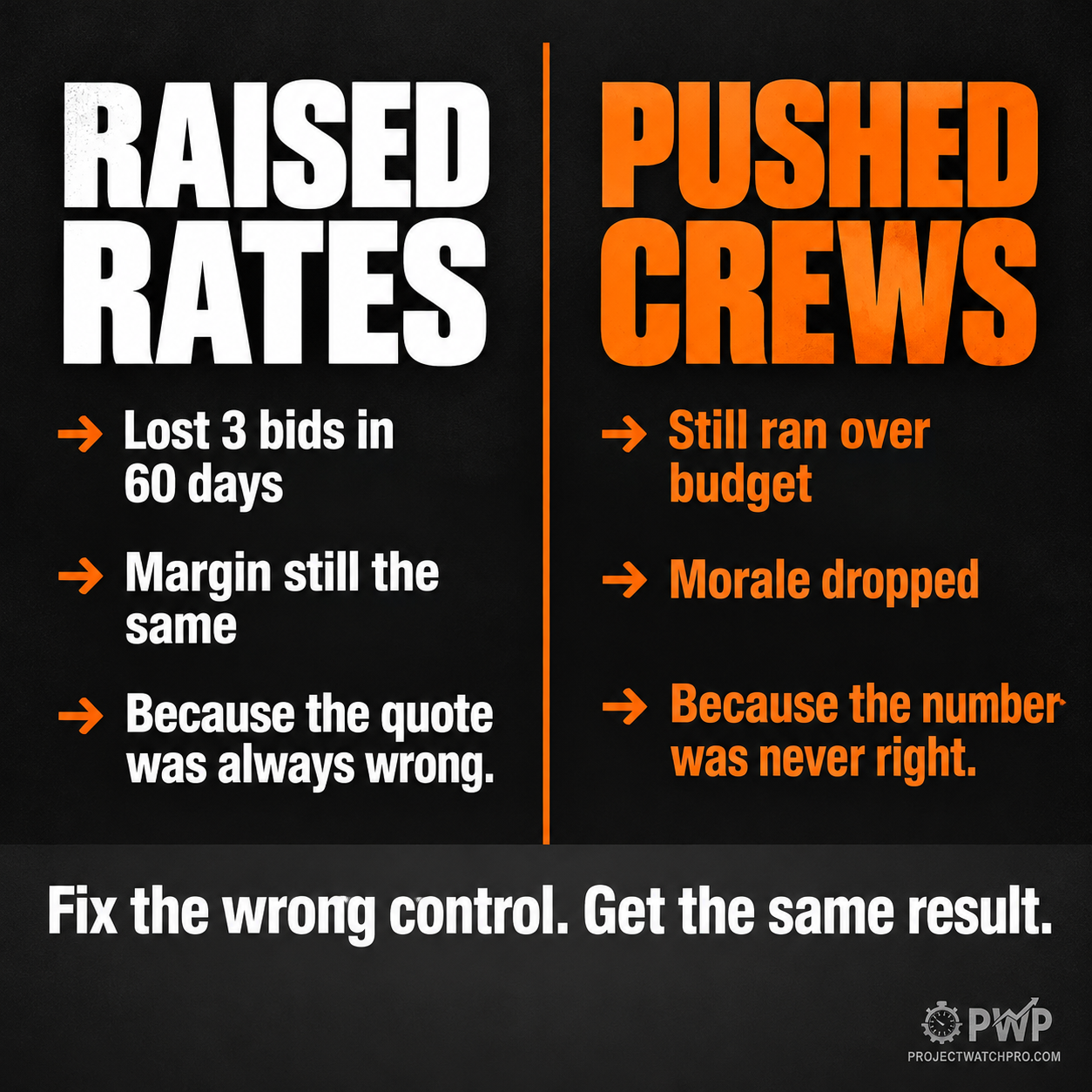
Here's what each wrong fix looks like. If you raise rates when the real issue was execution, you start losing bids you should have won — to competitors who haven't fixed the problem either but are still cheaper. You get fewer jobs. The margin stays bad. If you push crews harder when the quote's costs were incomplete, they burn through a job that was never going to pay out. And now they know it, which costs you more the next time.
There's a check that takes 60 seconds. Here's why it matters before you touch anything.
A construction profit loss can come from two places — the quote was built on costs that were too low, or the field spent more time and money than the quote allowed. The fix is different for each. A pricing error needs a new cost model. An execution gap needs a field process change. Applying the wrong fix makes the next job worse, not better.
Two Ways It Plays Out Wrong
Most owners know something went wrong. Not many know which thing.
When You Raise Rates But the Problem Was Execution
You quote the next job higher. The crew still runs long. You're paying more attention to the numbers, but the hours in the field aren't changing. And now you're losing jobs to competitors who are quoting the same work cheaper.
You didn't fix the margin. You just got fewer jobs at the same bad margin.
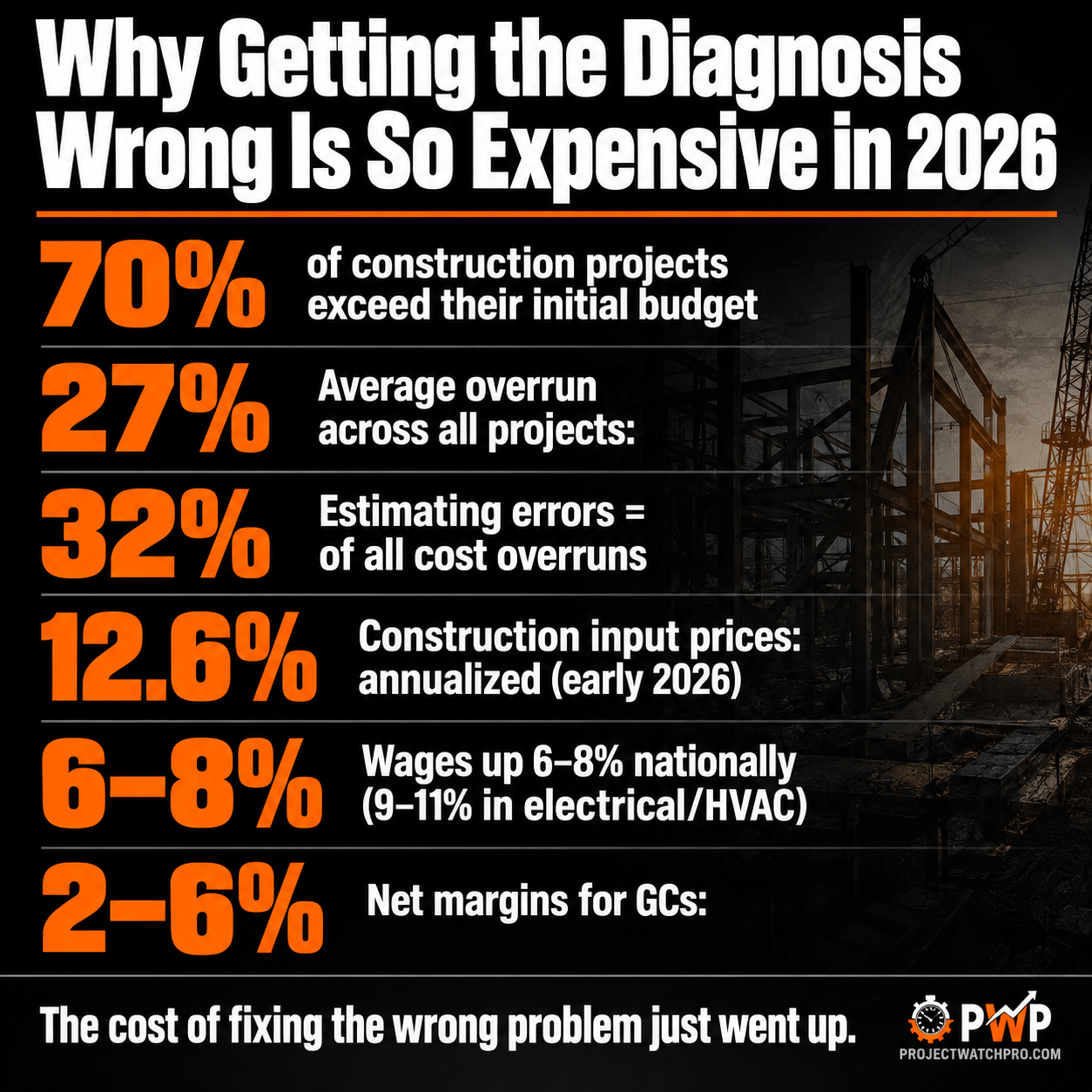
That's a double hit. Construction input prices rose at a 12.6% annualized rate in the first two months of 2026. If you raise your price to recover a field problem on top of that, you're pricing yourself out of work — and still bleeding on every job you win.
When You Push Crews But the Quote Was Incomplete
You run tighter field supervision. You check in more. The crew still runs over budget.
Because the quote never had the right labor cost to begin with. Wage without burden. Setup time not counted. Task time guessed low. Pushing people harder on a number that was always wrong doesn't fix the number. It just burns them out faster on jobs that were never profitable — and they remember it next time you ask for a push.
According to a 2026 industry analysis, estimating errors alone account for 32% of all construction cost overruns — and the average gap between an initial estimate and final project cost is 14%. Cite: Medium/Nexus Estimating.
Why the Blame Game Never Ends
There's no fast, standard first check that tells you which control moved. So owners go on instinct. They ask around. They hear the loudest voice in the room.
The estimator isn't lying. The foreman isn't lying. Both can be completely right about what they saw — and still be wrong about what caused it.
Here's why margin loss looks the same from the outside, no matter which problem caused it:
- Job ran over budget → could be underbid costs, could be a slow crew, could be both
- Hours exceeded estimate → could be a wrong labor rate, could be actual inefficiency
- Materials overage → could be wrong quantities, could be waste in the field
With net margins for general contractors typically running 2–6%, there's no margin for error in the diagnosis either. A wrong call costs real money.
You're not the problem. The absence of a fast first-step check is.
And right now, that check matters more than it ever has. Wages are up 6–8% nationally in 2026 — 9–11% in electrical and HVAC. The cost of running a labor-heavy job on a bad number, whether the estimate or the execution, is higher than it's been in years. Getting the diagnosis right before you change anything has never had a bigger payoff.
The Check That Takes 60 Seconds
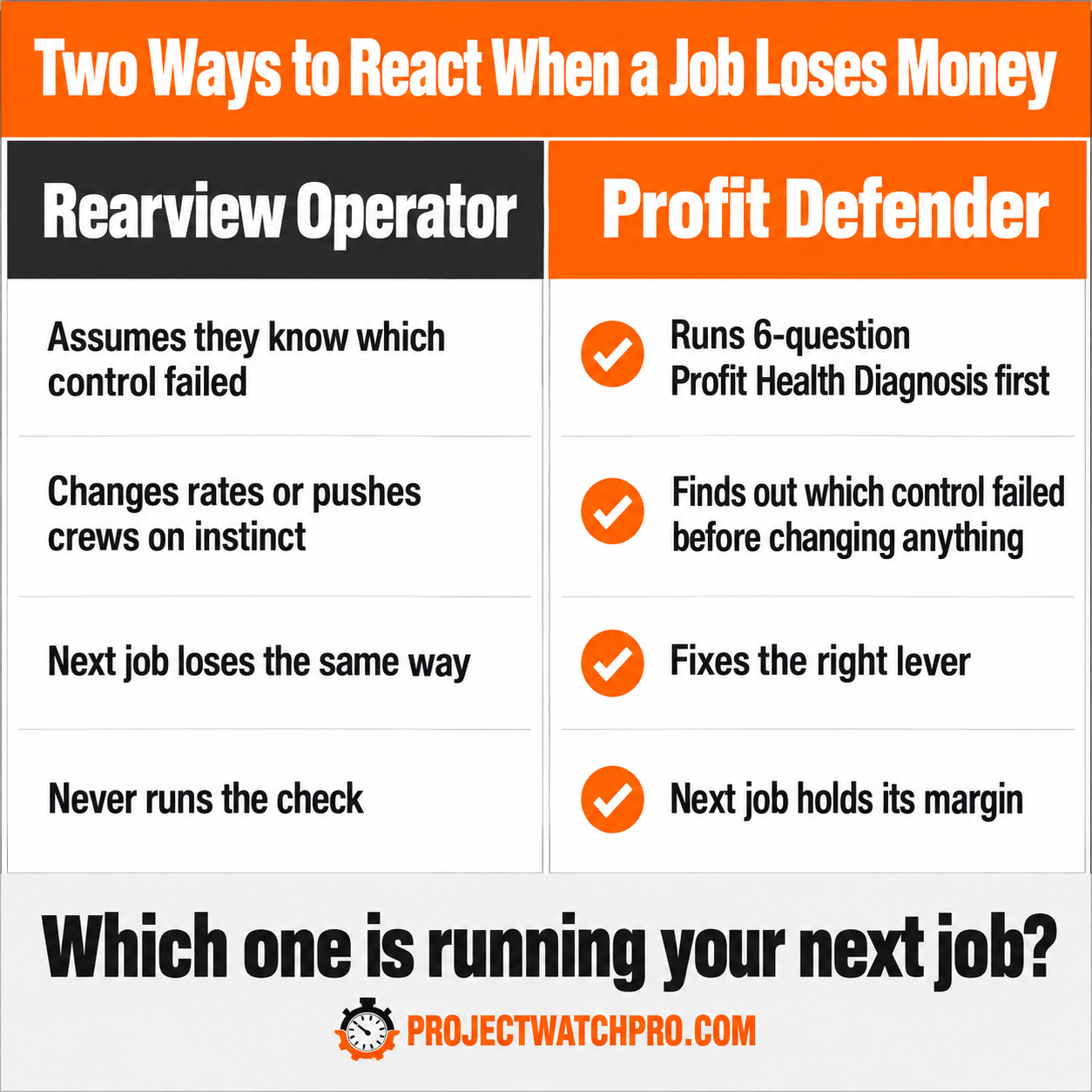
Before you adjust a rate, have a hard conversation with your foreman, or rebuild your estimating sheet — answer six questions first.
The free Profit Health Diagnosis at profithealthroadmap.com gives you:
- A Profit Health Level from 0–5
- The first control to investigate
- A first action and a personalized roadmap
- Your result in under 60 seconds
- No financial statements required
- No sales call to get your result
Here's why this matters before anything else.
Say you get a Level 0–1 result and it points you to the estimate. You dig in and find your loaded labor rate was $18 below actual cost. The field never had a chance. Pushing them harder would have hurt morale and changed nothing.
Or say you get a Level 3–4 result and it points to field execution. You look at the numbers and find setup and idle time running 22% over quoted hours. The estimate was solid. Crew management needed work.
In almost every Profit Recovery Review I run, the owner walked in thinking they knew which one it was. About half of them were right. The half that were wrong had already spent months fixing the wrong thing.
What the Diagnosis Looks at
The 6 questions cover the areas that matter most: how job costs are compared after the fact, how labor hours are tracked in the field, whether the quote includes all six cost layers, what happens to extra work, and whether costs are tracked in real time or reconstructed after the job closes. That's where the real gaps show up.
This Works in Any Trade
The same two failure points apply in HVAC, electrical, fabrication, painting, concrete, and landscaping. The numbers change. The trade changes. But you're always asking the same question — did the quote start from the right costs, or did the field spend more than it was allowed?
What Changes When You Know Which Problem You Have
Here's what fixing the wrong thing looks like over 60 days.
An owner assumes the field ran over. Raises rates. Loses three bids. Margin doesn't improve because the quote still underpriced labor. Three months later, the problem is still there — and now there's less work to show for it.
Here's the other path. The same owner runs the 6-question check first. Gets pointed to the estimate. Runs labor cost through the full calculation and finds that wage alone was being used — burden, overhead, and task costs weren't in the number. Reprices the next two jobs correctly. Wins both. Keeps the margin.
The difference is not working harder. It is knowing which lever to pull first.
At a $3M annual revenue level, fixing the wrong control can mean $150K in recoverable margin sitting unfound per year. At $5M, that number is closer to $200K. That's not from doing more work. It's from stopping the leak you already have.
With construction wages rising 6–8% per year and material input costs up 12.6% annualized in 2026, every month you fix the wrong thing is a month the real problem gets more expensive.

Key Takeaways
- Fixing the wrong problem makes the next job worse — raising rates when execution is the issue loses bids; pushing crews when the quote was incomplete burns them on a number that was never right
- Estimating errors account for 32% of all construction cost overruns, and the average gap between an initial estimate and final project cost is 14% — [industry data confirms the problem is split](/estimated-vs-actual-labor-cost-construction)
- Net margins for general contractors run 2–6%, meaning a misdiagnosed fix that costs even one bid or one bad job can erase months of profit
- The Profit Health Diagnosis — 6 questions, free, under 60 seconds — identifies your Profit Health Level (0–5) and the first control to investigate before you change anything
- Labor cost is the most common incomplete input in a quote — [true labor cost goes well beyond wage](/true-labor-cost-contractors) and is the most frequent reason the estimate looks right but the job doesn't
- The check matters more in 2026 — with wages up 6–8% and material prices up 12.6% annualized, the cost of fixing the wrong control is higher than it has been in years
Frequently Asked Questions
How do I know if my construction job lost money because of a bad estimate or field execution?
Compare your quoted hours and costs against what actually happened, broken down by task or phase — not just totals. If actual hours exceeded quoted hours on specific tasks while the rate held, that's execution. If the rate itself was wrong from the start, that's the estimate. [This comparison](/estimated-vs-actual-labor-cost-construction) shows the method. When you're not sure which to look at first, the free Profit Health Diagnosis at profithealthroadmap.com points you to the right one in under 60 seconds.
What should I do first after a construction job loses margin?
Run a fast check before changing anything — pricing, processes, or crew expectations. The Profit Health Diagnosis at profithealthroadmap.com gives you a Profit Health Level in under 60 seconds and tells you which control to investigate first. Changing something before you know which control failed risks making the next job worse.
Why do I keep losing money on the same type of job?
Usually one of two things: the quote uses an incomplete labor cost (wage without burden, overhead, or task-specific costs), or a specific phase or crew keeps running long without being caught early enough to correct. [Calculating your true labor cost](/true-labor-cost-contractors) is the most common first fix. The 6-question check tells you which to tackle first.
What is a Profit Health Level for contractors?
It's a 0–5 score from the free Profit Health Diagnosis at profithealthroadmap.com. Zero means multiple controls are failing at once. Five means your pricing, field tracking, and billing are all working. The score tells you where to look first — not what to assume. You get it in under 60 seconds with no financial statements required.
Does the estimate vs execution problem affect all trades?
Yes. Whether you run electrical, HVAC, fabrication, painting, concrete, or landscaping — the two failure points are the same: the quote was built on costs that were too low, or the field spent more than the quote allowed. The 6-question diagnosis works the same way regardless of trade.
How much does it cost to fix the wrong problem after a job loses money?
It depends on what you change. Raising rates when execution is the real problem can cost you bids — at a $3M annual revenue level, fixing the wrong control can mean $150K or more in recoverable margin sitting unfound per year. The 6-question check is free and takes under 60 seconds. The cost of skipping it is much higher.


