
Profit Isn’t Found in Reports. It’s Defended in Real Time
Profit Isn’t Found in Reports. It’s Defended in Real Time
🧭 Introduction: Why Most Companies Find Out Too Late
Most project-driven companies don’t struggle with effort.
They struggle with timing.
Crews work hard. Jobs get finished. Reports get reviewed. And yet profit still seems to “disappear” somewhere between the estimate and the final invoice.
The real problem isn’t that companies don’t track costs. It’s that they see them too late.
In construction, trades, fabrication shops, and service businesses, the decisions that shape profit happen during the job—not after it’s closed. When cost and margin visibility only arrive in end-of-job reports, your ability to act is already gone. At that point, you’re not managing profit. You’re explaining it.
This article breaks down:
Why traditional job costing reports fail at protecting margin
The difference between learning and steering
How decision speed changes outcomes
And what “real-time profit defense” actually looks like in practice
If you’ve ever looked at a job summary and thought, “If I had known this sooner…” — this is for you.
📚 Table of Contents (TOC)
Why Most Companies Learn About Profit Too Late
Learning vs. Steering: Two Very Different Jobs
Why End-of-Job Reports Create a False Sense of Control
What “Real-Time Profit Defense” Actually Means
The Real Enemy Is Delay
Why Decision Speed Beats Perfect Data
Where ProjectWatchPRO Fits In
Practical Takeaways You Can Use This Week
FAQ: Real-Time Profit Tracking in Project Businesses
Conclusion: Protecting Profit Before It’s Gone
🧠 Why Most Companies Learn About Profit Too Late
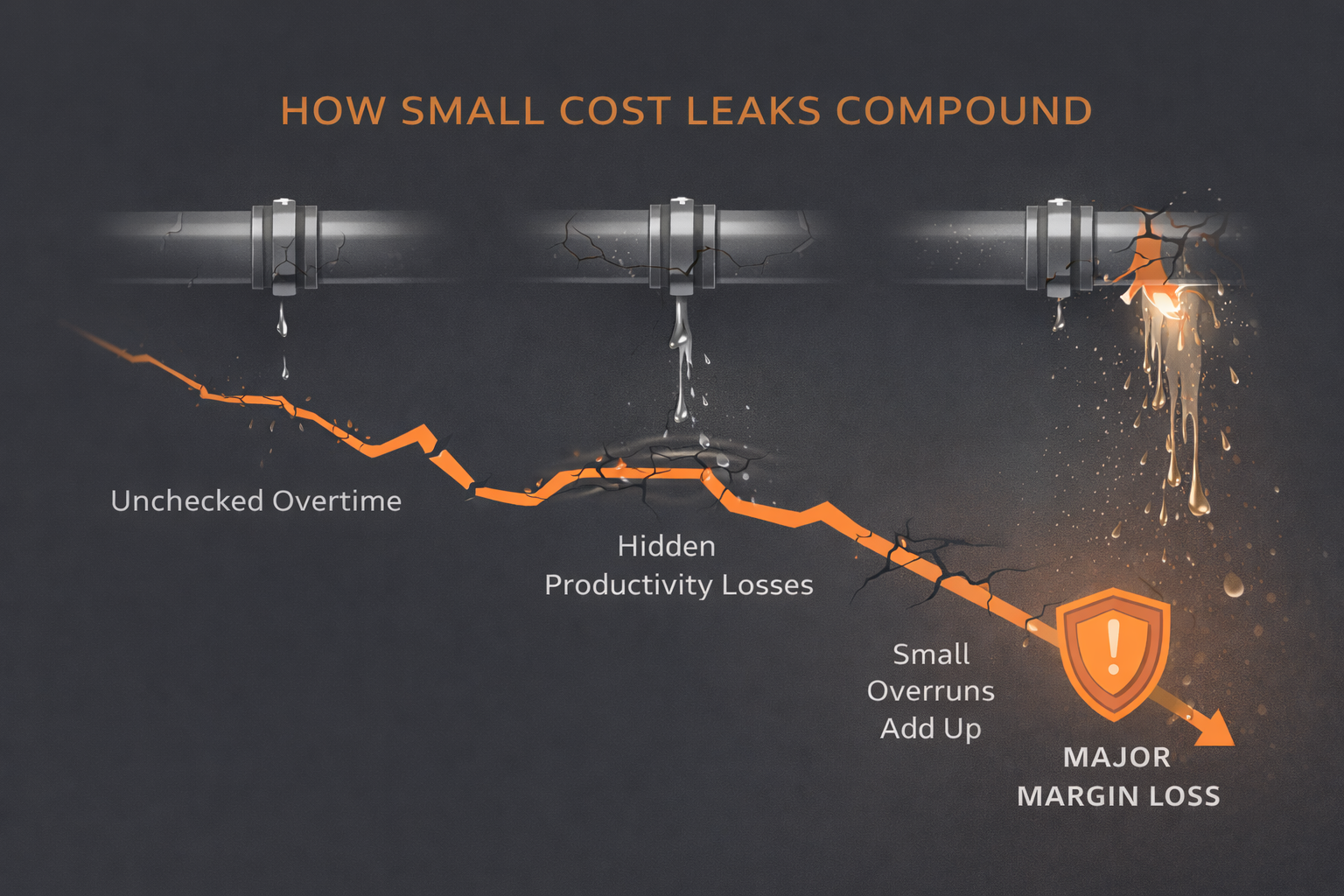
Profit Rarely Disappears in One Big Moment
In most project-driven businesses, profit doesn’t vanish because of one catastrophic mistake.
It erodes.
A bit of extra overtime.
A task that takes longer than planned.
A crew switch that changes productivity.
A few small decisions made without updated cost information.
Individually, none of these look dangerous. Collectively, they quietly drain margin.
The Timing Gap in Traditional Job Costing
Most companies only see the full financial picture after the job is done. By then, the work is complete and the outcome is locked in.
That turns job costing into a history lesson instead of a control system.
If you want a baseline definition of traditional job costing, see:
It’s a useful accounting concept—but notice how it assumes analysis happens after the work, not during it.
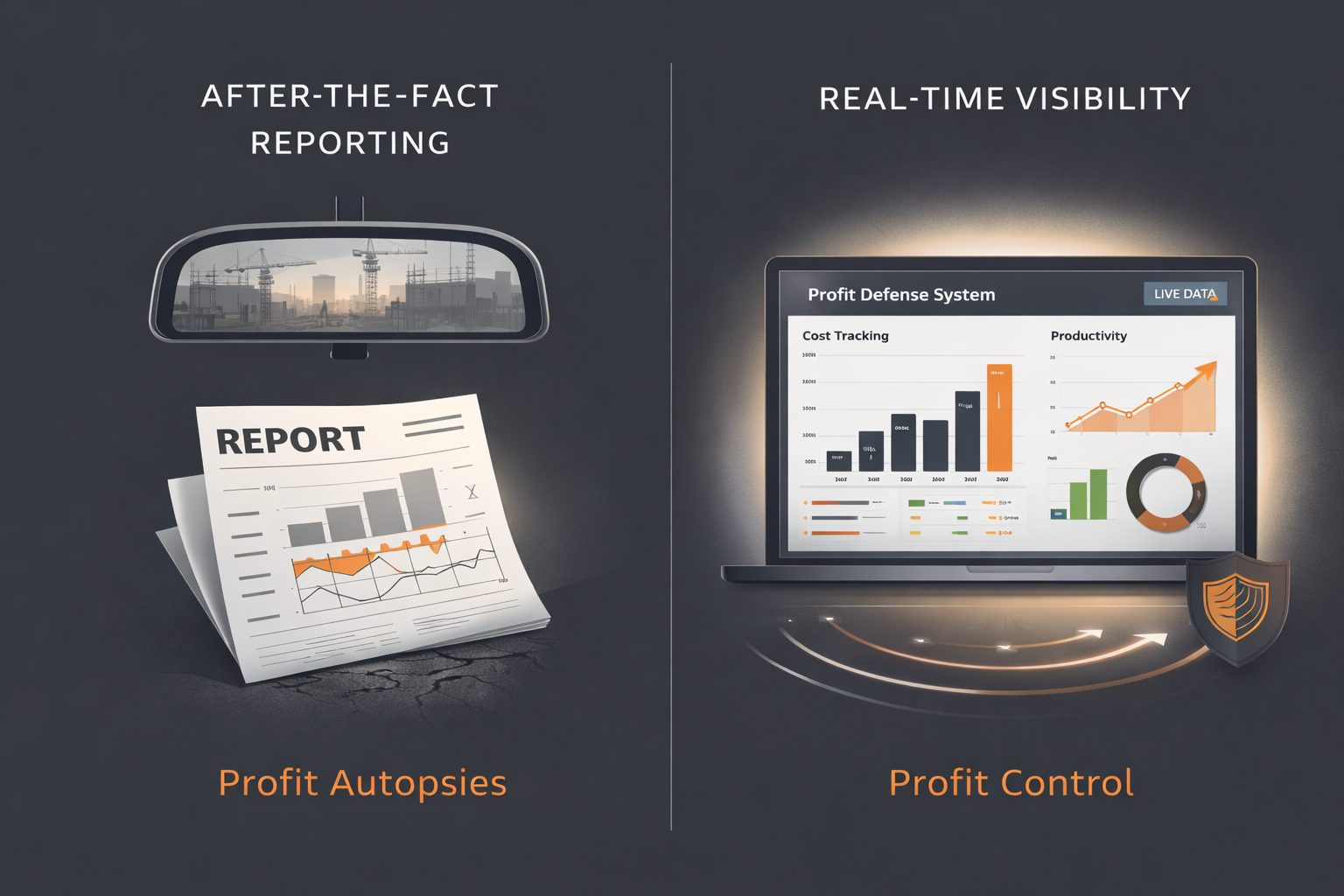
🛞 Learning vs. Steering: Two Very Different Jobs
Why Reports Are Great for Learning
End-of-job reports are valuable. They help you:
Understand what went wrong
See what went right
Improve estimating and planning next time
They are excellent learning tools.
Why Dashboards Are Built for Steering
But learning and steering are not the same thing.
A speedometer doesn’t tell you how fast you were driving yesterday. It tells you how fast you’re going right now—while you can still change course.
Dashboards exist for the same reason: to help you adjust while the job is still alive.
The Speedometer vs. The Rearview Mirror
Most job costing systems work like a rearview mirror.
Real-time systems work like a dashboard.
That difference is operational, not philosophical—and it directly determines whether you can still protect margin or only explain why it’s gone.
📄 Why End-of-Job Reports Create a False Sense of Control
The Illusion of “Good Management”
There’s a familiar pattern:
You review a clean job summary.
You analyze the margin.
You discuss what to fix next time.
It feels responsible. It feels professional. But it doesn’t change the job that just finished.
Where Profit Is Actually Won or Lost
Profit is shaped when:
Overtime starts creeping in
Tasks take longer than planned
Crews shift between activities
Costs drift away from assumptions
If you only see these changes weeks later, you didn’t manage them. You absorbed them.
For context on how margins are typically analyzed, see:
Again—useful, but inherently backward-looking.
🛡️ What “Real-Time Profit Defense” Actually Means
From Explaining Profit to Protecting It
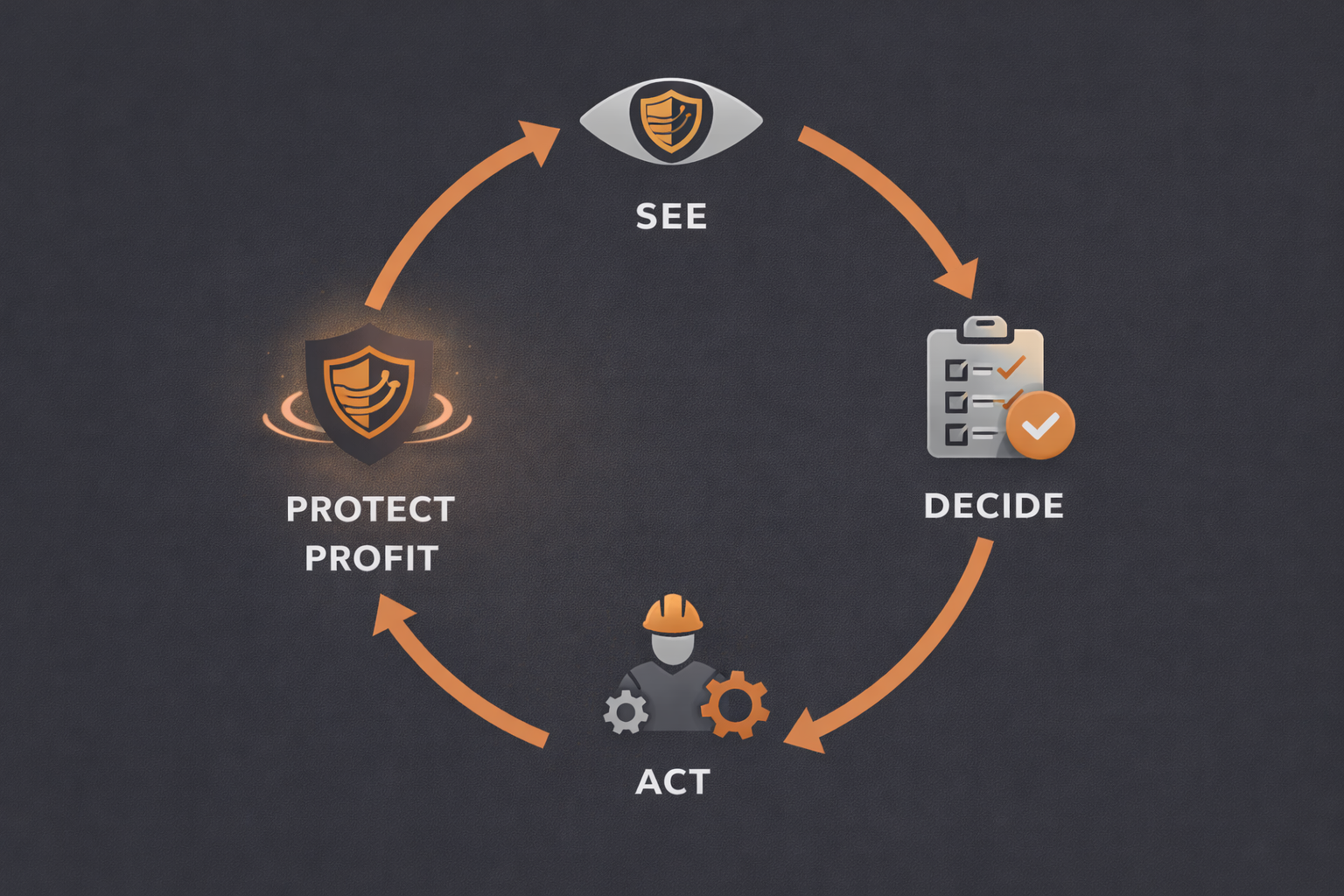
Real-time profit defense means:
Costs update as work happens
Margin shifts are visible while they’re still fixable
Decisions are based on current reality, not last month’s summary
Managers can intervene during execution, not during post-mortems
This is the shift:
From explaining profit
To defending profit
Visibility as an Operational Weapon
Visibility isn’t about more data. It’s about earlier truth.
When the truth arrives early, you can still change the outcome.
⏱️ The Real Enemy Is Delay
Why Delay Beats Bad Estimating
Most companies think their problem is:
Bad estimates
Rising labor costs
Tight margins
Market pressure
Those matter. But the real enemy is delay.
Delay in seeing problems.
Delay in understanding impact.
Delay in acting.
When Information Arrives Too Late to Matter
By the time delayed information reaches you, the job has already moved on. The window to fix the problem is closed.
That’s why timing beats perfection.
⚡ Why Decision Speed Beats Perfect Data
Same Problem, Different Outcome
Two companies can face the same cost overrun:
Company A sees it in real time and adjusts crew mix, tasks, or schedule.
Company B sees it in a report three weeks later.
Same problem. Completely different result.
Speed Isn’t Rushing. It’s Not Being Late.
Decision speed isn’t about being reckless.
It’s about not being late with the truth.
🧩 Where ProjectWatchPRO Fits In
Built Around Real-Time Cost Reality
ProjectWatchPRO was built around one core idea:
Profit isn’t found in reports. It’s defended in real time.
Instead of stopping at base wages or delayed summaries, it:
Calculates true labor cost across multiple layers
Updates costs as people clock in, switch tasks, or hit overtime
Pushes that reality straight to your dashboards
Shows margin movement while the job is still alive
Learn more here:
✅ Practical Takeaways You Can Use This Week
Shift How You Think About Cost Visibility
Separate learning reports from steering tools
Ask: “How fast do we see cost drift?”
Identify which decisions are being made with outdated numbers
Start measuring time-to-visibility, not just accuracy
Remember: You can’t protect profit you can’t see yet
❓ FAQ — Real-Time Profit Tracking in Project Businesses
Isn’t real-time costing overkill for small teams?
No. Smaller teams feel margin swings faster—and benefit even more from early visibility.
Are end-of-job reports still useful?
Yes. They’re great for learning. They’re just not tools for steering live work.
What’s the biggest risk of delayed cost visibility?
You make good decisions with bad timing—which produces bad outcomes anyway.
How often should costs update to be useful?
Often enough that you can still change the outcome. For most operations, that means minutes, not weeks.
🧱 Conclusion — Protecting Profit Before It’s Gone
Project-driven companies don’t lose profit because they lack experience or discipline.
They lose it because delayed visibility removes their ability to act.
When costs are only visible after work is complete, profit becomes history.
When costs are visible as they change, profit becomes something you can defend.
If you believe profit should be protected—not explained after the fact—
👉 Take a Guided Tour and see what real-time profit defense looks like in practice.


