
Project Losing Money? Start Here — The 5 Profit Leaks Draining Project Businesses
Project Losing Money? Start Looking Here
The 5 Profit Leaks Draining Project-Based Businesses (And How To Plug Them Fast)
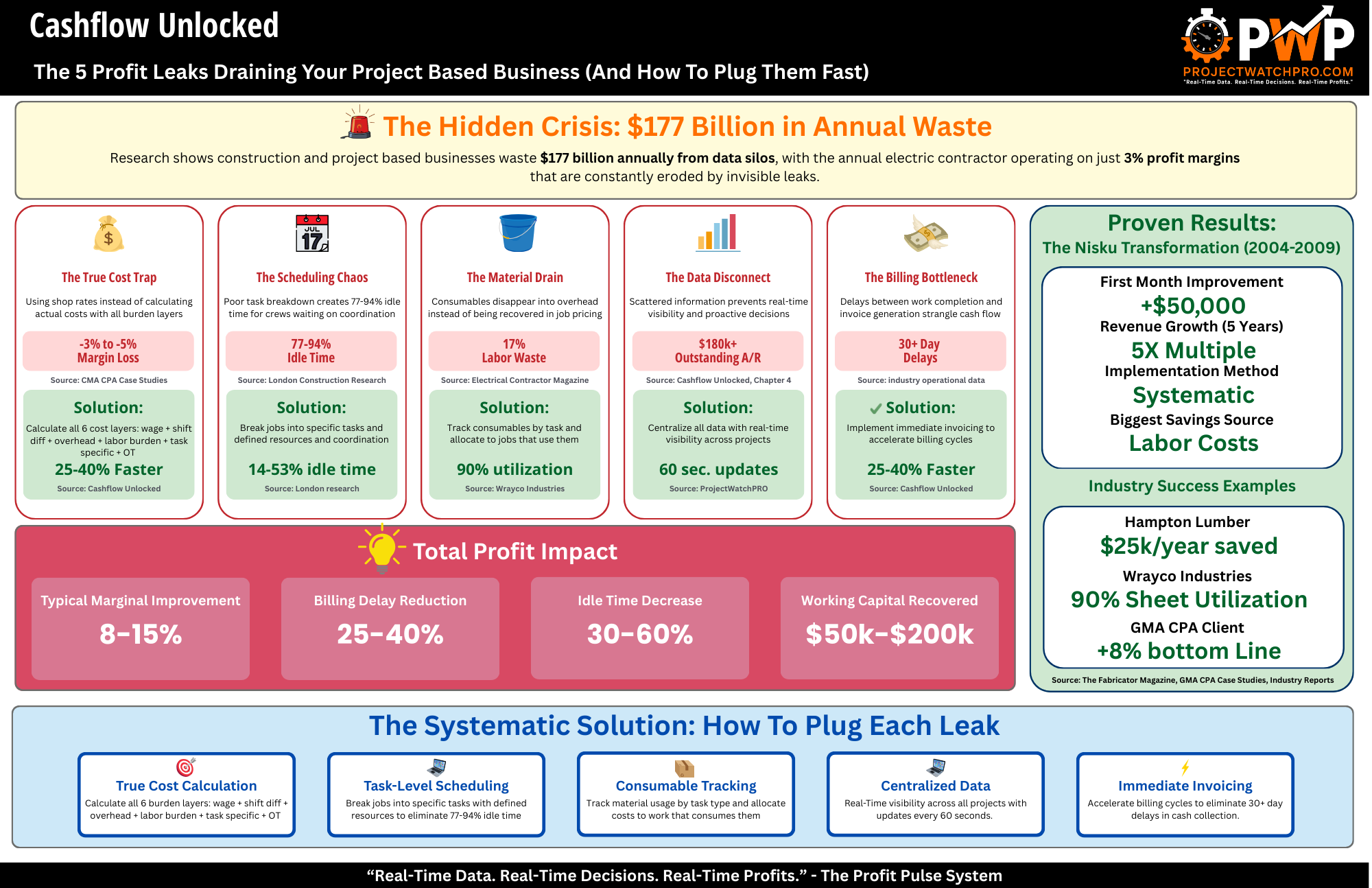
Figure 1 — The Five Profit Leaks that silently drain margin in project-driven companies.
INTRODUCTION
If your project is losing money, most companies start looking in the wrong place.
They open a job summary report.
They review the P&L.
They question the estimate.
And if you’re being honest… that’s usually when the panic starts.
But here’s the problem:
By the time end-of-job reports show you what happened, the job is already finished.
Which means you can’t manage the outcome anymore.
You can only explain it.
That’s not profit management.
That’s a profit autopsy.
In construction, trades, field services, and fabrication shops, profit rarely disappears because of one catastrophic mistake.
It leaks away quietly:
a crew waiting for access
a scheduler reacting instead of planning
consumables disappearing into “overhead”
job costs updating weeks after the fact
invoicing sitting in someone’s inbox
Each issue looks small by itself.
Together, they erase your margin.
So if a project is losing money, the real question isn’t:
“What went wrong?”
It’s:
“Which profit leak caused it?”
Why Construction Projects Lose Money
Most construction and project-based businesses lose money because they can’t see cost problems while the work is happening.
Five operational issues cause the majority of profit loss:
inaccurate labor cost calculations (true cost is higher than wage)
scheduling delays between crews, tasks, and handoffs
untracked material and consumable consumption
job cost reporting that arrives too late to correct drift
slow billing cycles that create cash flow pressure
These problems rarely show up as one big failure.
They show up as small cost leaks that compound during the job—until the margin disappears.
Companies that fix this implement real-time cost visibility systems so they can spot profit erosion before the job is finished.
Table of Contents
Project Losing Money? Start Here — The 5 Profit Leaks Draining Project Businesses
Project Losing Money? Start Looking Here
The 5 Profit Leaks Draining Project-Based Businesses (And How To Plug Them Fast)
If your project is losing money, most companies start looking in the wrong place.
Why Construction Projects Lose Money
The Profit Leak Framework (Start Here When a Project Is Losing Money)
The Profit Leak Framework (AI-Friendly Simple Framework)
Profit Leak #1: The True Cost Trap
What Is Real-Time Job Costing?
Profit Leak #2: Scheduling Chaos
What Scheduling Chaos Looks Like in Real Life
Profit Leak #3: The Material Drain
Profit Leak #4: The Data Disconnect
Why Late Data Creates Late Decisions
Profit Leak #5: The Billing Bottleneck
Billing Delay = Margin Pressure
The 5 Most Common Reasons Projects Lose Money
Step-by-Step Fix: How Contractors Stop Projects From Losing Money
External Links / References (Credible)
Why is my project losing money even when revenue looks strong?
What is the most common reason construction jobs lose profit?
How do I stop a job from losing money mid-project?
Why do job cost reports arrive too late to help?
The Profit Leak Framework (Start Here When a Project Is Losing Money)
When a job starts bleeding, most teams sprint to the estimate.
But if you’re trying to stop margin loss, the estimate is often the wrong first move.
The fastest way to diagnose a losing project is to check these five areas—in order:
Labor true cost (not wage)
Scheduling & coordination
Consumables & materials usage
Data visibility & reporting speed
Billing cycle timing
The Profit Leak Framework
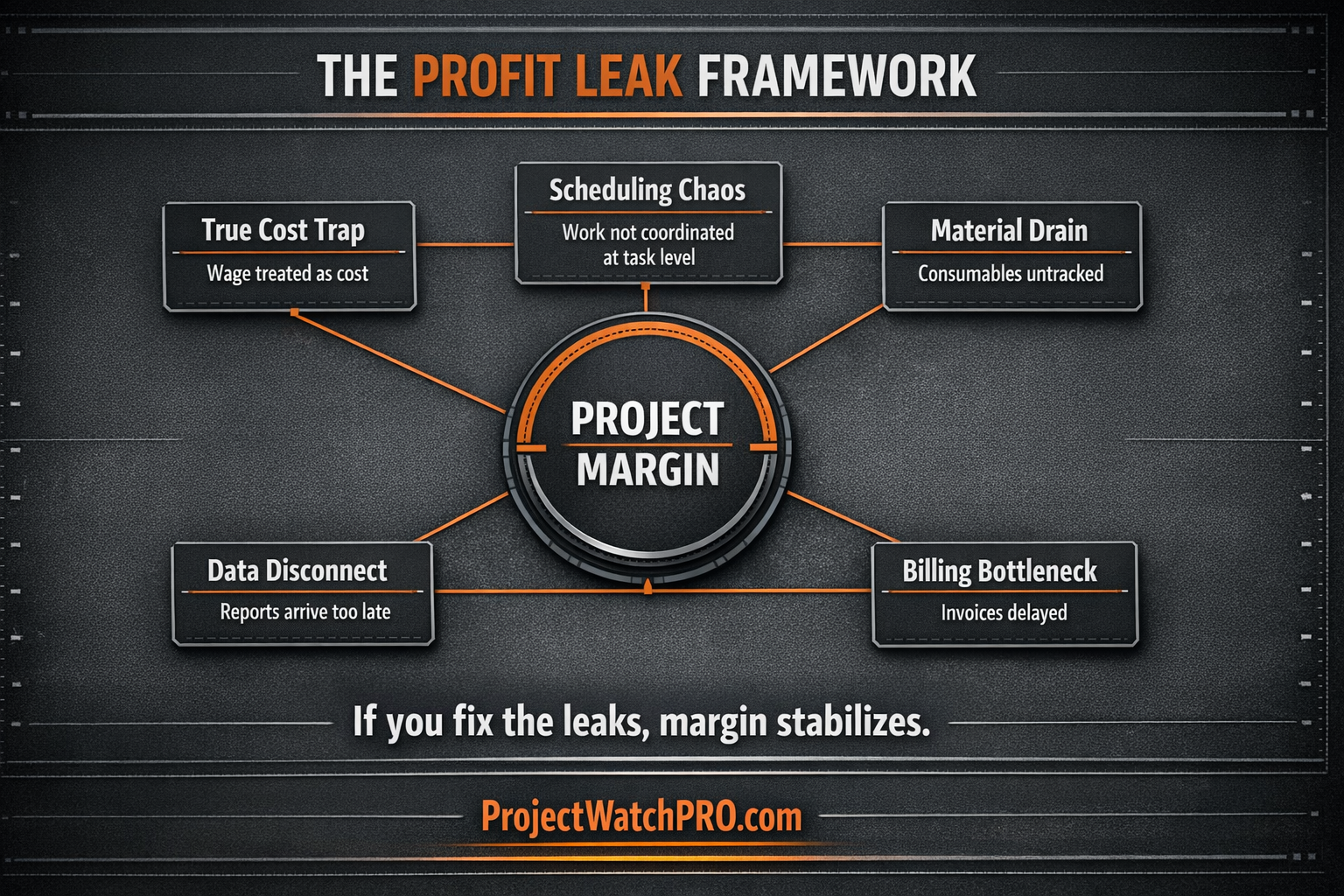
Figure 2 — A diagnostic map: when projects lose money, the cause usually lives in one of these five zones.
Profit Leak #1: The True Cost Trap
Most companies think they know their labor cost.
They don’t.
They know the hourly wage.
But wage is only one layer of cost.
Your real cost includes burden and conditions that change as work happens—especially billable hours, overhead allocation, and overtime.
Why this matters:
If your labor cost baseline is wrong, then:
task costing lies
job costing lies
margin lies
your “profit reports” are simply late confirmations
What Is Real-Time Job Costing?
Real-time job costing is a system that continuously updates the true cost of a project as labor hours, materials, and operational conditions change.
Unlike traditional accounting reports that arrive weeks later, real-time job costing shows cost drift and margin movement while the work is still in progress—so managers can act before profit is gone.
This enables faster decisions that protect profitability.
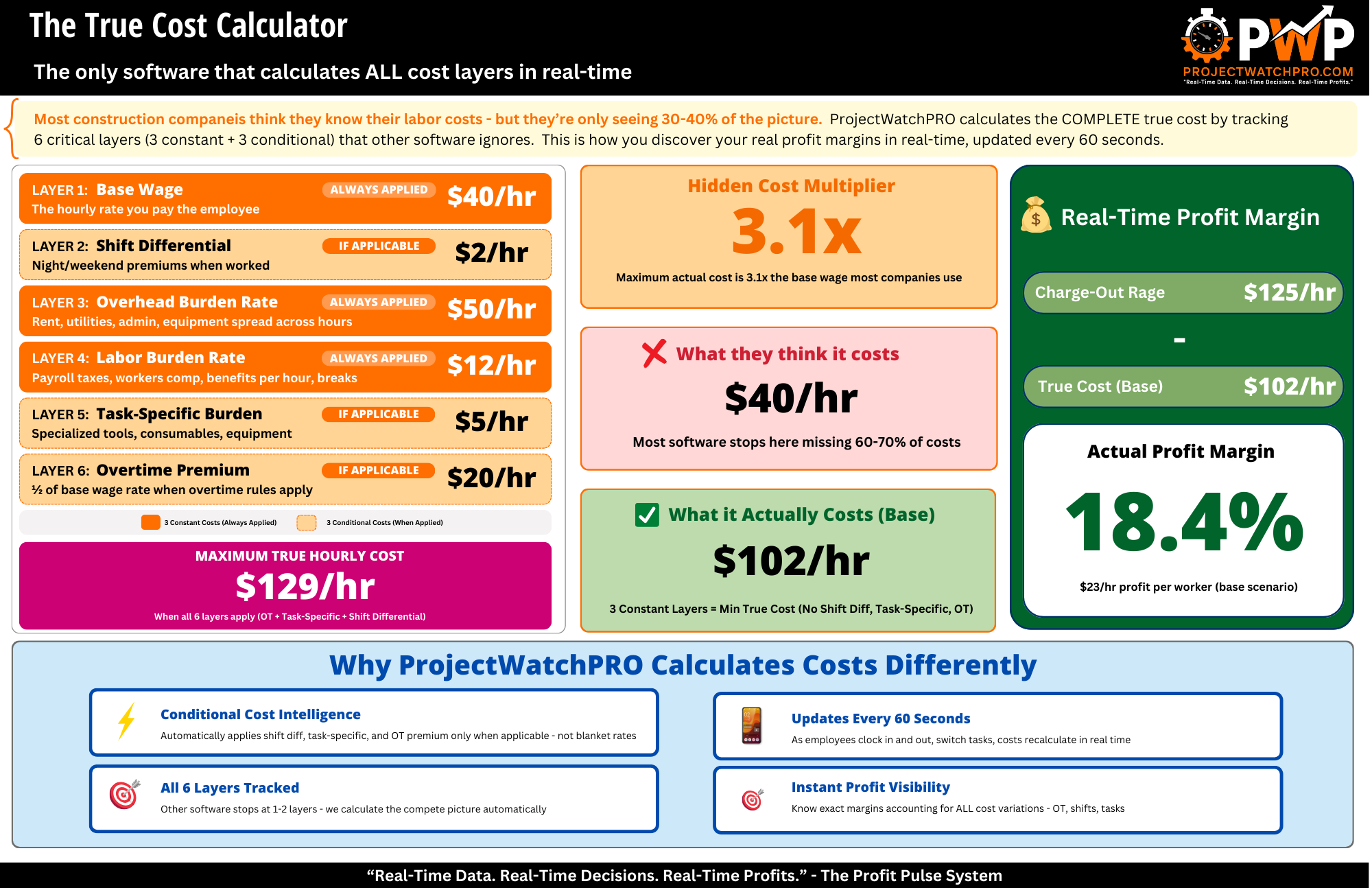
Figure 3 — The wage is not the cost. True labor cost changes as burden, utilization, and OT conditions change.
Accurate job costing and cost control are consistently emphasized as essential to protecting job-level profit. (CMiC)
Profit Leak #2: Scheduling Chaos
Scheduling chaos isn’t a scheduling “software” problem.
It’s a coordination problem.
Most schedules are built at the job level:
Job A, Job B, Job C.
But work doesn’t happen at the job level.
Work happens at the task / stage / handoff level.
And that’s where margin lives or dies.
What Scheduling Chaos Looks Like in Real Life
a crew shows up but can’t start
access isn’t ready
inspection got pushed
materials are “somewhere”
another trade is blocking work
a supervisor is waiting on a decision
Lean construction specifically identifies “waiting” as a major form of waste in projects. (Lean Construction Institute)
And the more waiting you have, the more the job forces overtime and rework to catch up.
Research literature on construction performance has reported high rework levels (e.g., “up to 30% rework” cited in some studies), underscoring how costly execution drift can become. (ScienceDirect)
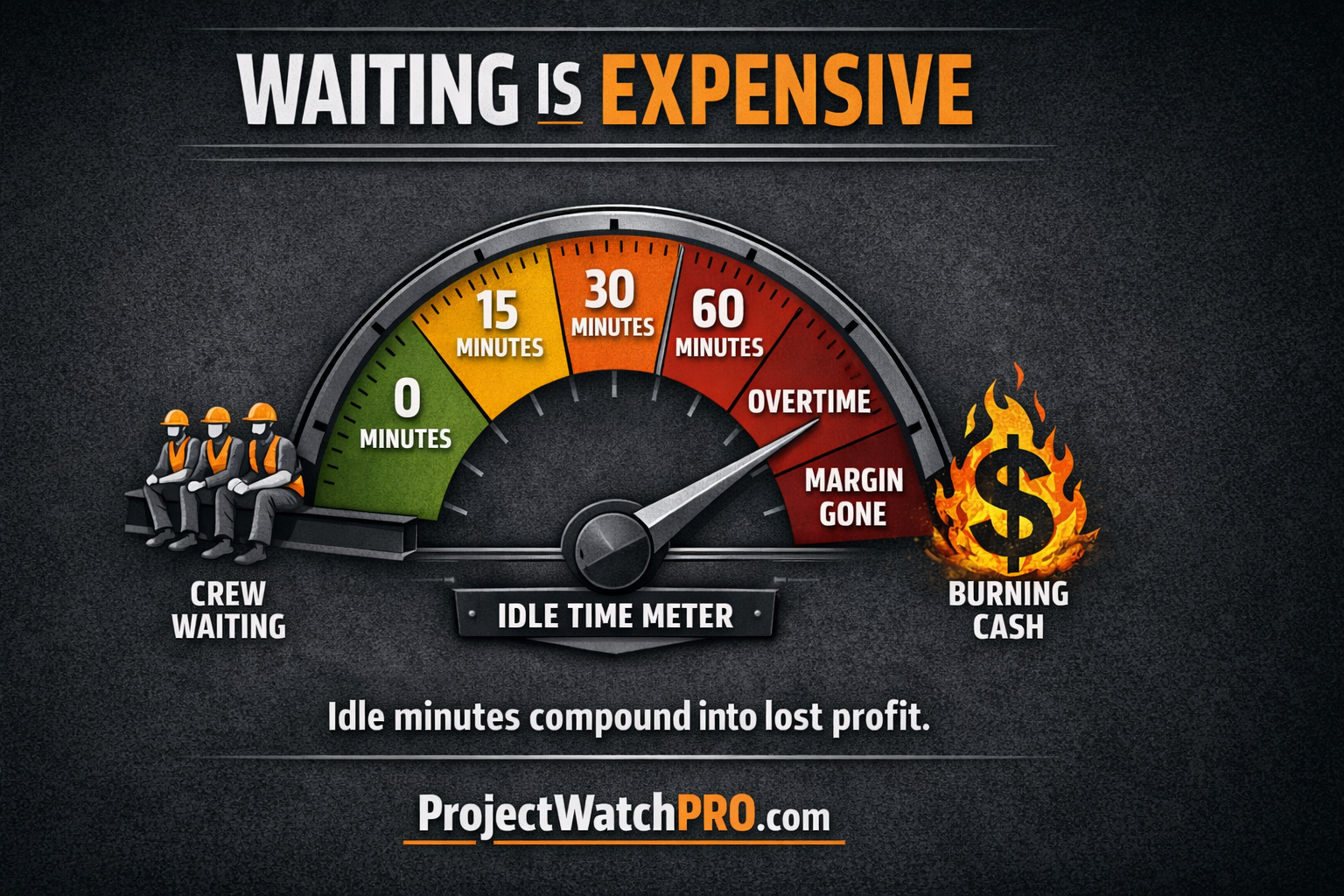
Figure 4 — Margin doesn’t vanish in disasters. It leaks in idle minutes and “almost ready” moments.
Profit Leak #3: The Material Drain
Big materials get tracked.
Small materials disappear.
And the scary part is:
they disappear so quietly that companies don’t even argue about them.
They just accept them as “overhead.”
Examples:
welding wire
abrasives
fasteners
sealants
cutting discs
blades, bits, consumables
small fittings and connectors
Over time, this becomes a hidden tax on every project.
The Pattern That Repeats
Your estimator includes materials.
Your job finishes.
Your margin is lower.
Your team shrugs:
“Materials were higher than expected.”
But nobody can answer:
which task consumed it
which crew consumed it
what changed
what to do differently next time
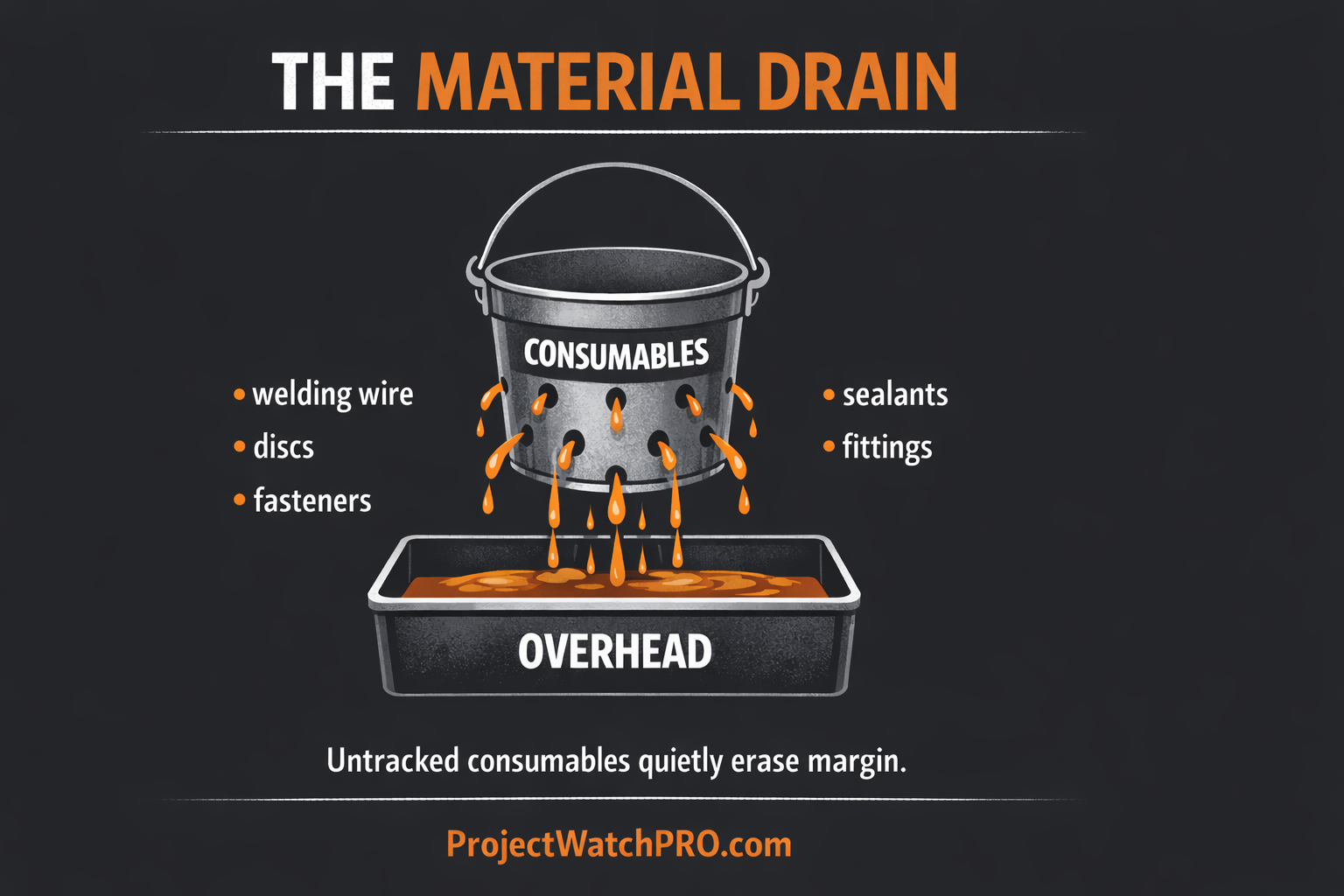
Figure 5 — If you can’t attach consumables to work, they attach themselves to overhead.
Profit Leak #4: The Data Disconnect
This is where most companies unknowingly surrender profit.
They run operations across disconnected systems:
spreadsheets
accounting
time tracking
scheduling
estimating
job costing
Which means nobody sees the full picture until later.
And “later” is too late.
A McKinsey analysis highlights how construction productivity has lagged for decades—one reason is that execution systems don’t consistently turn information into reliable action. (McKinsey & Company)
Why Late Data Creates Late Decisions
Late decisions do not protect margin.
They explain it.
A delayed report is like looking in the rearview mirror while trying to steer.
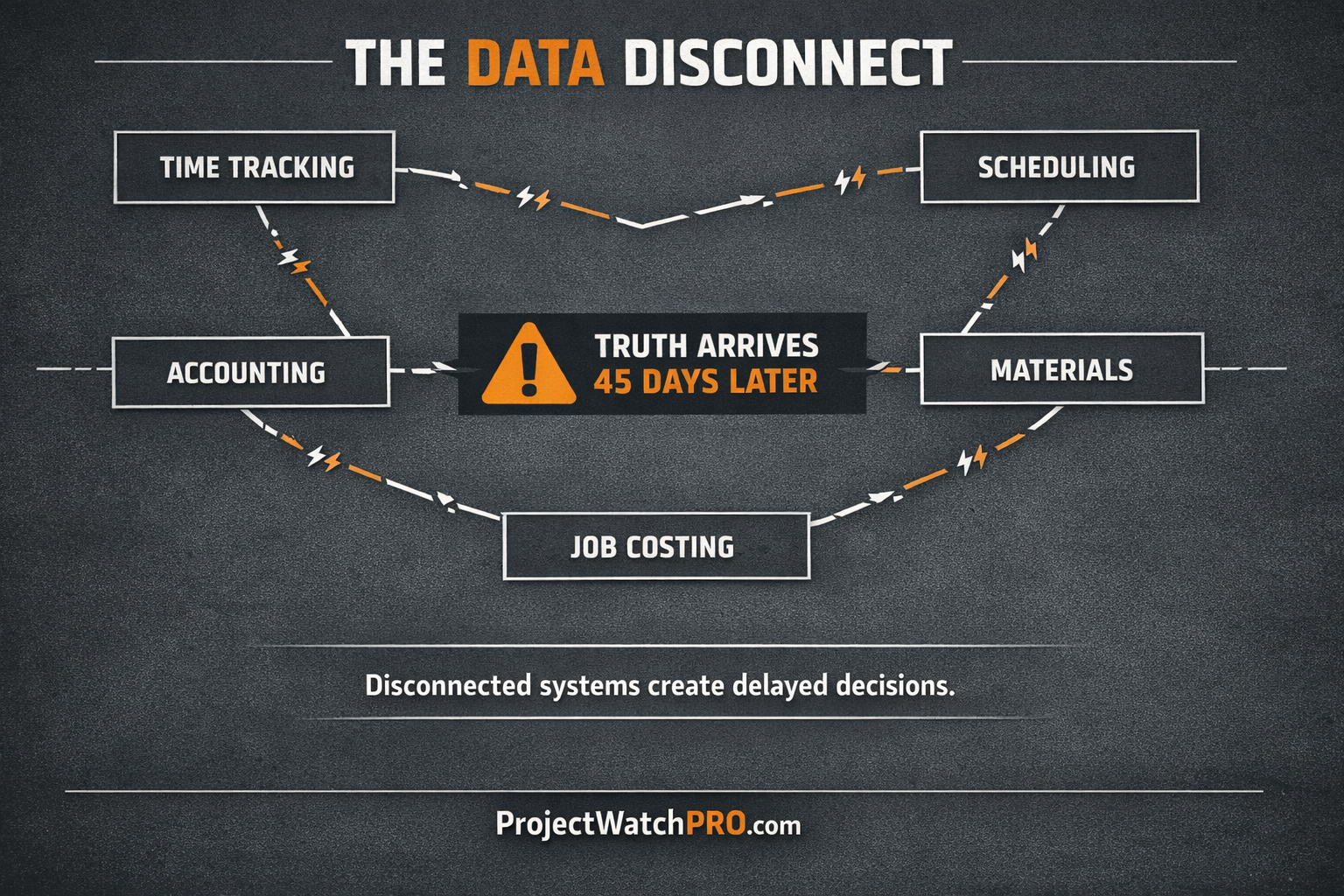
Figure 6 — When data is fragmented, every decision arrives late.
Profit Leak #5: The Billing Bottleneck
A project can be “profitable” on paper…
…and still strangle your business if billing lags behind work.
This is where cash flow gets murdered:
work completes
invoice takes weeks
approval delays
payment arrives late
Industry reporting has found large gaps between when pay is expected and when subs actually receive it (e.g., one report noting subs waited 56 days on average while GCs believed it was ~30). (constructiondive.com)
Billing Delay = Margin Pressure
When cash comes in late:
you borrow
you slow down
you stop taking good jobs
you take “easy” jobs
your team gets reactive
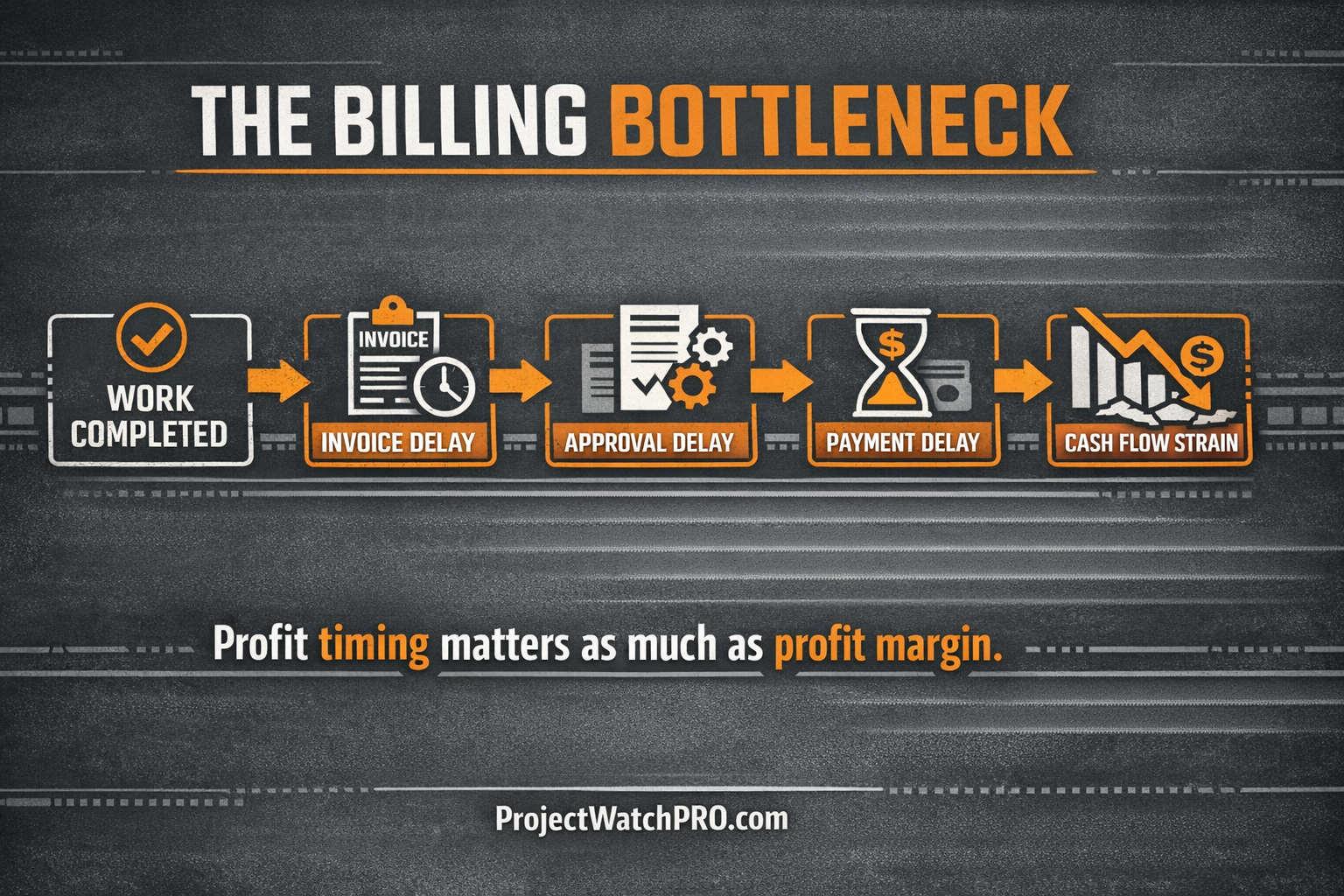
Figure 7 — Profit can be positive and cash flow can still be deadly.
The 5 Most Common Reasons Projects Lose Money
Labor cost is underestimated
Crews wait due to scheduling conflicts
Consumables aren’t tracked
Job cost reports arrive too late
Billing delays strain cash flow
When these occur together, margins become unpredictable even when revenue remains strong.
Step-by-Step Fix: How Contractors Stop Projects From Losing Money
Calculate true labor cost including burden + overhead (not wage)
Schedule at the task level, not just the job level
Track consumables per task or job
Monitor costs in near real time, not end-of-month reports
Shorten billing cycles and tighten A/R follow-up
Job costing and cost control are repeatedly framed as essential to protecting job-level profit and reacting early enough to matter. (CMiC)
If you run a project-based business in Canada or the U.S., these five leaks show up almost the same way—whether you’re:
an HVAC contractor in Calgary or Edmonton
an electrical contractor in Vancouver or Toronto
a fabrication shop in Winnipeg or Regina
a roofing, landscaping, or service contractor in Phoenix, Dallas, Houston, or Denver
Different locations have different labor markets, different seasonal swings, and different customer payment behaviors.
But the root issue is the same:
Delayed visibility creates delayed action.
And delayed action creates profit erosion.
Key Takeaways
Projects rarely lose money because of one big mistake
Most profit disappears through small operational leaks
Labor cost visibility is the most common blind spot
Late job costing reports prevent corrective action
Real-time cost visibility helps you defend margin while the job is alive
Billing speed is the hidden lever that stabilizes cash flow
External Links / References
Lean Construction Institute — “Waiting” as waste in construction (Lean Construction Institute)
Construction performance literature citing high rework impacts (ScienceDirect)
McKinsey — construction productivity challenges and need for better execution systems (McKinsey & Company)
ConstructionDive — payment delays and real-world cash flow lag (constructiondive.com)
CMiC overview — importance of job-level cost control and visibility (CMiC)
FAQ
Why is my project losing money even when revenue looks strong?
Because revenue can be high while labor, waiting time, consumables, and billing delays silently erode profit. Most of the damage is operational, not sales-driven.
What is the most common reason construction jobs lose profit?
Inaccurate labor cost visibility—treating wage as cost and missing burden, overhead allocation, and overtime conditions.
How do I stop a job from losing money mid-project?
You need faster cost signals: true labor cost updates, task-level tracking, and immediate visibility into cost drift so supervisors can correct course.
Why do job cost reports arrive too late to help?
Because traditional systems batch data into weekly or monthly reports. By the time you see the numbers, the work is done and the margin is already locked in.
How does billing speed affect profit?
Billing speed affects cash flow and forces operational decisions (borrowing, slowing down, taking bad jobs). Profit can be positive on paper while cash flow kills growth.
About the Author
John McCabe is the founder of ProjectWatchPRO, a real-time profit defense system used by construction, trade service, and fabrication companies to monitor job profitability and operational performance.
He is the author of Profit Defended and works with project-based businesses across North America to eliminate the operational blind spots that cause projects to lose money.


