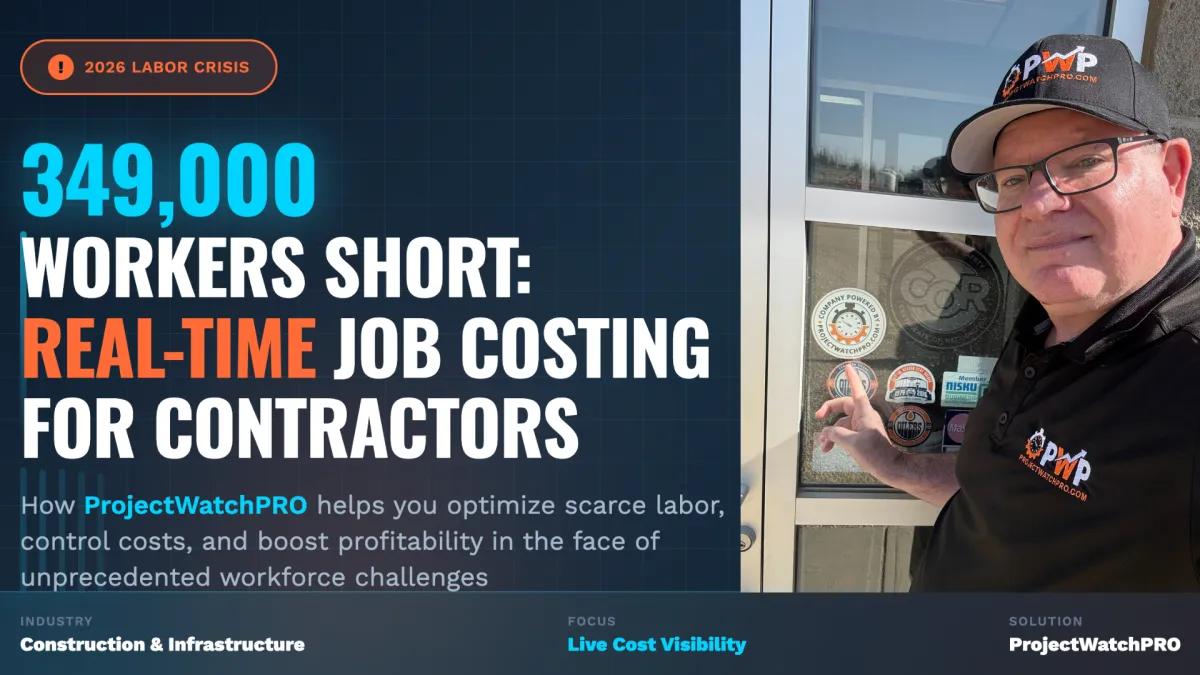
349,000 Workers Short: How Real-Time Job Costing Helps Contractors Thrive Amid the 2026 Labor Crunch
Introduction
Just last week, the Associated Builders and Contractors warned that the industry needs to bring in 349,000 new workers in 2026 to keep up with demand—yet macroeconomic headwinds, rising material costs, and ongoing shortages make every crew hour and every dollar count more than ever. For project-based businesses in construction, field services, and infrastructure, the real challenge isn't just finding workers—it's squeezing maximum productivity and profitability from the ones you have. Without crystal-clear visibility into live costs, even well-planned jobs can quietly bleed margins through overtime creep, inefficient scheduling, or unrecovered consumables.
In regions like Alberta, Canada, where infrastructure pushes such as Calgary's feeder main replacements and broader renewal efforts are ramping up alongside housing initiatives like Build Canada Homes, these pressures are amplified. Contractors here face not only U.S.-style labor constraints but also local factors like a projected shortfall of 108,000 workers over the next decade across Canada, with BuildForce Canada estimating a need for 351,800 new hires by 2033 to replace retirees and meet demand. This blog explores how shifting focus to planned, ongoing projects—where cost control, visibility, and proactive decision-making are critical priorities from day one—positions real-time tools as essential for thriving, not just surviving.

New Blog Post
349,000 Workers Short: How Real-Time Job Costing Helps Contractors Thrive Amid the 2026 Labor Crunch
The Growing Labor and Cost Crisis in Construction
Key Challenges for Contractors in 2026
How ProjectWatchPRO Transforms Daily Operations
Real-World Impact on Profitability and Efficiency
FAQs About Real-Time Job Costing
What is real-time job costing?
How does it differ from traditional methods?
Is it suitable for small contractors in Alberta?
The Growing Labor and Cost Crisis in Construction
The construction sector is at a tipping point in 2026. In the U.S., the Associated Builders and Contractors' latest analysis highlights the urgent need for 349,000 net new workers to sustain growth amid infrastructure booms and residential demands. Meanwhile, material costs are surging at the fastest pace since early 2023, with the Associated General Contractors of America reporting a 3.6% year-over-year increase in nonresidential construction inputs as of November 2025, outpacing contractors' bid prices and squeezing margins.
In Canada, the story is similar but localized. Alberta's energy and infrastructure sectors anticipate needing 20,000 new construction workers over the next decade for $22 billion in planned projects, while nationwide, labor shortages are exacerbated by an aging workforce and policy hurdles delaying approvals. Calgary's infrastructure is particularly vulnerable, with 11% of assets in poor condition and labor constraints risking delays in critical renewals like water mains and housing developments under initiatives such as Build Canada Homes. These trends underscore a shift: Success in 2026 demands treating cost visibility as a core strategy from project inception, not a reactive fix.

Key Challenges for Contractors in 2026
Labor shortages force contractors to adapt in ways that heighten operational risks. Here's a breakdown of the primary issues:
- Increased Reliance on Overtime and Subcontractors: With fewer workers available, crews often extend hours or bring in external help, inflating labor burdens. Without immediate cost insights, these extras can erode profits unnoticed, especially in union environments common in Alberta.
- Resource Misallocation Across Sites: Stretching limited teams leads to idle time, inefficient travel (critical in spread-out prairie projects), or rushed work causing rework. Traditional weekly reports or spreadsheets only flag problems post-facto, allowing overruns to compound.
- Volatile Material Prices and Supply Chain Issues: Costs are rising 0.4% monthly, with tariffs pushing inputs higher. Extras like additional materials aren't always captured for billing, turning potential reimbursements into losses.
- Aggressive Bidding in a Competitive Market: To secure work amid high demand, bids are tight, leaving no buffer for surprises. In fixed-budget municipal projects in Calgary, this can lead to disputes or lost future opportunities.
These challenges aren't emergencies—they're the new normal for ongoing projects, where proactive tools can turn constraints into advantages.
How ProjectWatchPRO Transforms Daily Operations
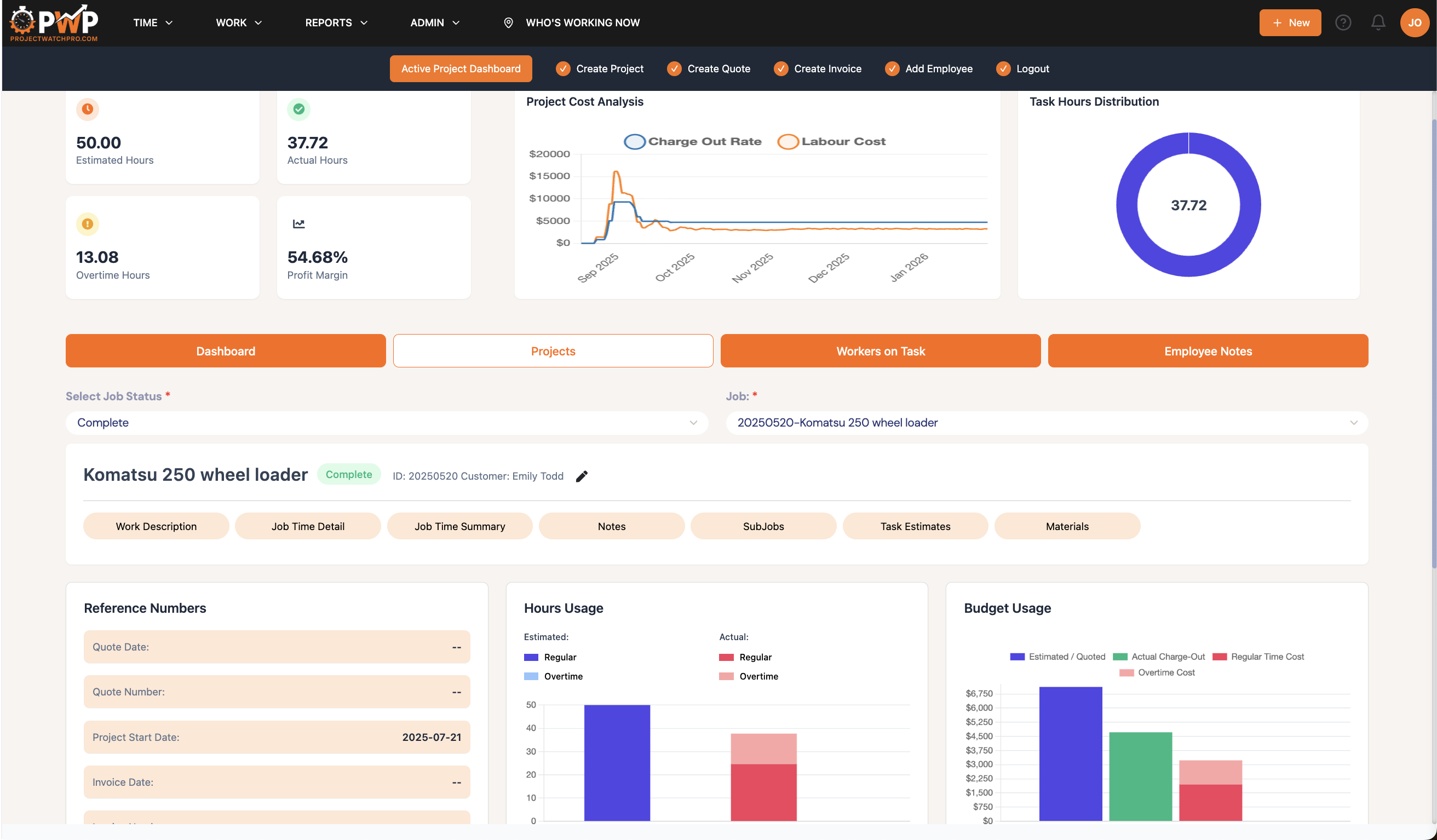
ProjectWatchPRO is designed for these persistent pressures, providing real-time data that enables proactive management from the start of any job. Here's how it delivers high-impact solutions:
Feature: Live Profitability & Cost Visibility
Benefit: Margins update every 30-60 seconds, including full labor (wages, burdens, overtime), materials, and overhead.
Relevance to 2026 Challenges: Instantly spot overtime eroding margins; reassign resources or negotiate change orders early, protecting profits in labor-tight markets.
Feature: Optimized Crew Scheduling |
Benefit: Drag-and-drop interface shows real-time availability, locations, and costs.
Relevance to 2026 Challenges: Maximize scarce labor by balancing sites, reducing idle time in Alberta's expansive projects.
Feature: Accurate Mobile Time & Consumable Tracking
Benefit: App-based clock-ins tie every minute and item to jobs without delays.
Relevance: Capture all billables amid spiking material costs, ensuring full reimbursements.
Feature: Instant Invoicing & Decision Support
Benefit: On-demand invoices with documented costs; dashboards flag trends like 15% overruns.
Relevance to 2026 Challenges: Improve cash flow and empower on-site decisions, vital for fixed-timeline infrastructure work.
By integrating these, ProjectWatchPRO shifts focus to strategic efficiency, making it indispensable for planned projects where visibility is key.
Real-World Impact on Profitability and Efficiency
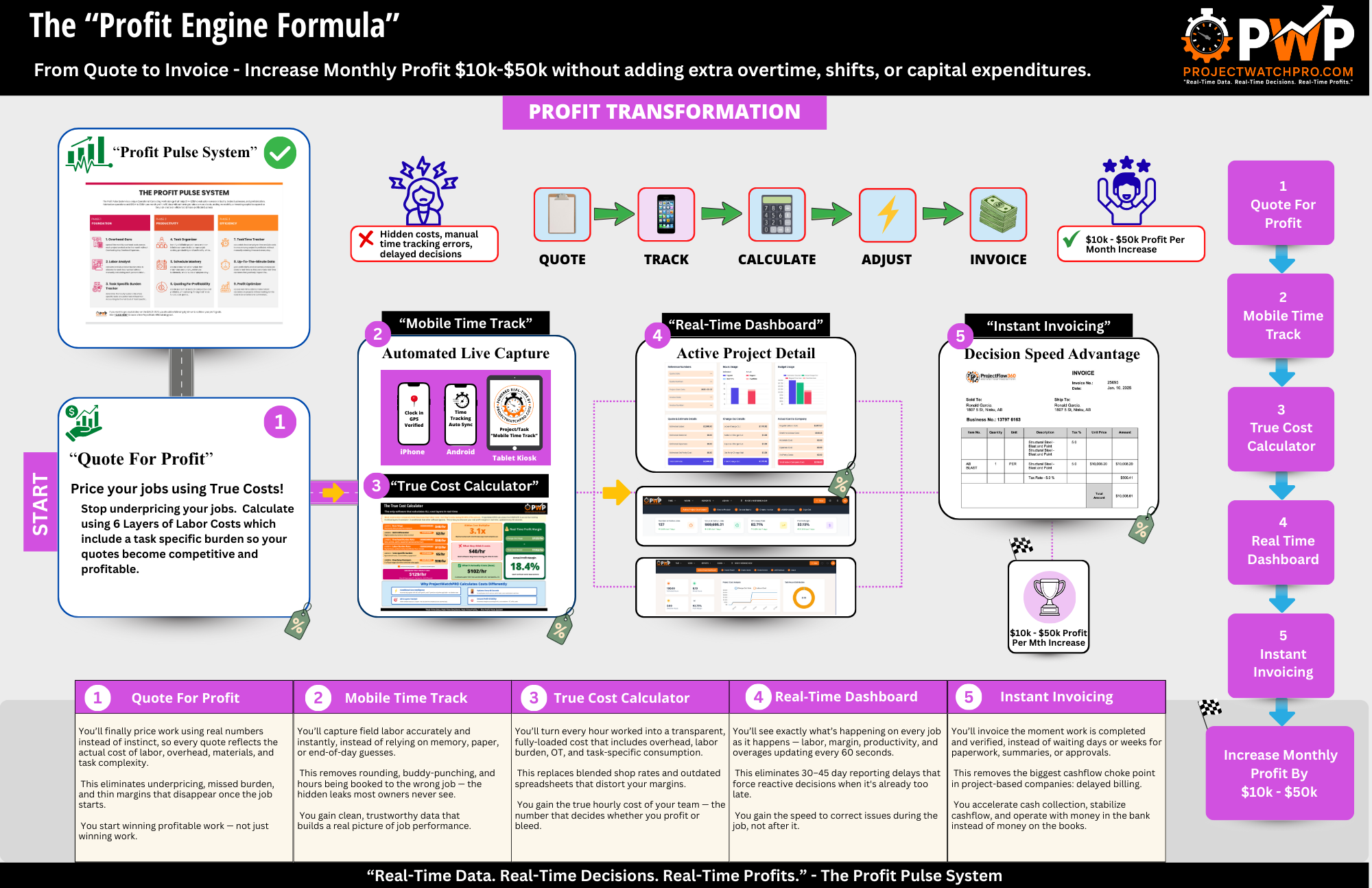
In a labor-short 2026, ProjectWatchPRO helps contractors do more with less. For instance, on Calgary's infrastructure renewals, real-time tracking could prevent the "extensive risk" from labor delays by optimizing crew deployment across sites. Nationally, as Canada grapples with trade uncertainty and housing pressures, tools like this boost bid confidence, reduce waste, and turn workforce limits into a competitive edge—ultimately driving higher profitability and project success rates. That's why smart contractors, trades, and fabrication companies are moving to ProjectWatchPRO's "Profit Engine Formula".
FAQs About Real-Time Job Costing
What is real-time job costing?
It's a system that tracks project expenses (labor, materials, overhead) in near real-time, allowing instant adjustments to maintain profitability.
How does it differ from traditional methods?
Unlike weekly spreadsheets, it provides live data, preventing issues from escalating and enabling proactive decisions.
Is it suitable for small contractors in Alberta?
Yes—scalable for any size, it's especially useful for local infrastructure bids with tight margins.
Can it integrate with existing tools?
PWP often syncs with accounting software, mobile apps, and GPS for seamless adoption.
Conclusion
The 2026 labor shortage isn't waiting—it's here, and it's hitting margins hard. ProjectWatchPRO gives you the real-time edge to control costs proactively, optimize every crew, and stay profitable no matter the headwinds. Don't let shortages dictate your bottom line. Schedule a quick demo today and see live job costing in action for your team.
Author Bio

Written by John A. McCabe, an experienced construction tech advocate based in Edmonton, Alberta, with over 20 years in consulting project based businesses and software solutions for various industries.


