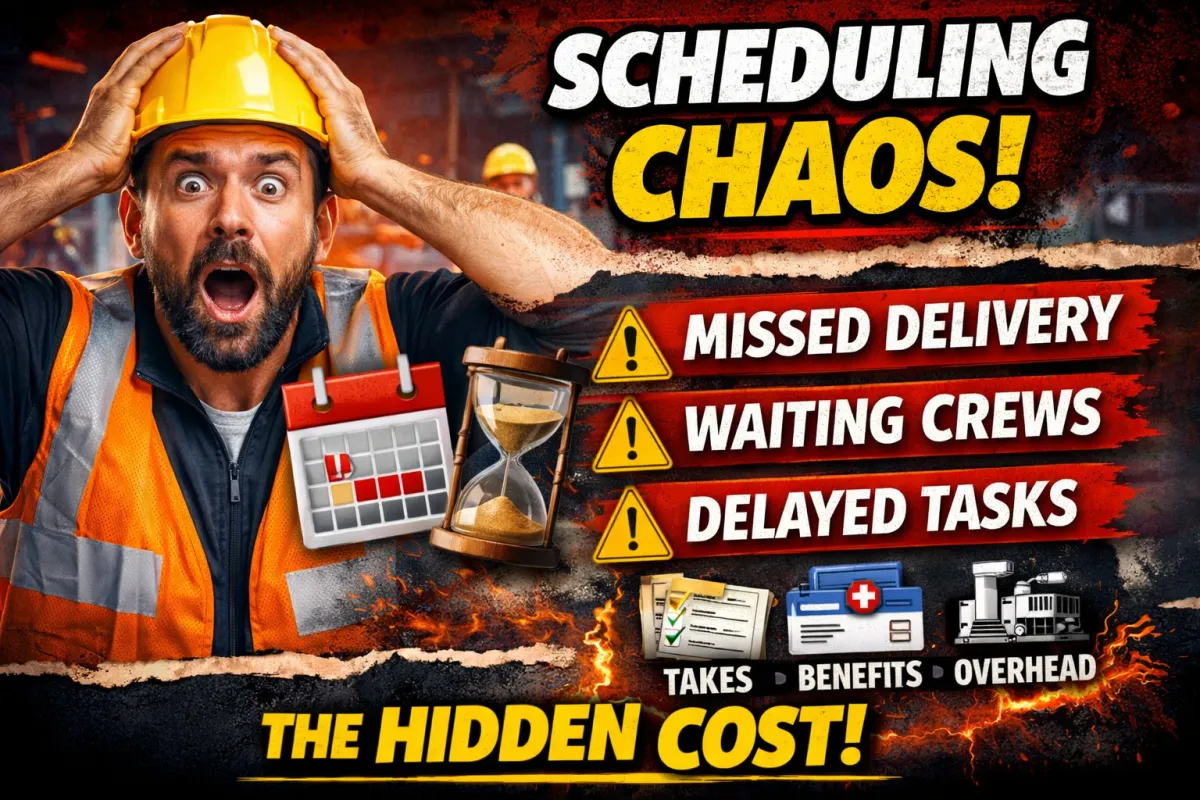
Scheduling Chaos in Construction: The Hidden Cost of Waiting, Handoffs, and Almost-Ready Jobs
Scheduling Chaos: The Hidden Cost of Waiting, Handoffs, and Almost-Ready Jobs
Most scheduling problems do not start with bad crews.
They start when work gets scheduled before it is actually ready to start.
A delivery slips.
An inspection gets bumped.
Access is not open.
A prior task is still unfinished.
A required tool is somewhere else.
A crew gets sent anyway.
Now labor is waiting.
Another crew gets reshuffled.
Equipment gets displaced.
The next task gets pushed.
By lunch, the week is already bleeding margin.
That is scheduling chaos.
And in project-driven work, small scheduling problems do not stay small. They multiply across crews, tasks, tools, and handoffs because the schedule is really a dependency chain, not just a calendar.
In this article, you’ll learn:
why scheduling chaos is usually a dependency problem
how waiting and handoffs quietly destroy profit
why “almost-ready” jobs create idle time and overtime
the difference between calendar thinking and dependency thinking
how to schedule work instead of scheduling jobs
a simple framework to reduce blocked work before it hits the field

Why Scheduling Problems Multiply So Fast
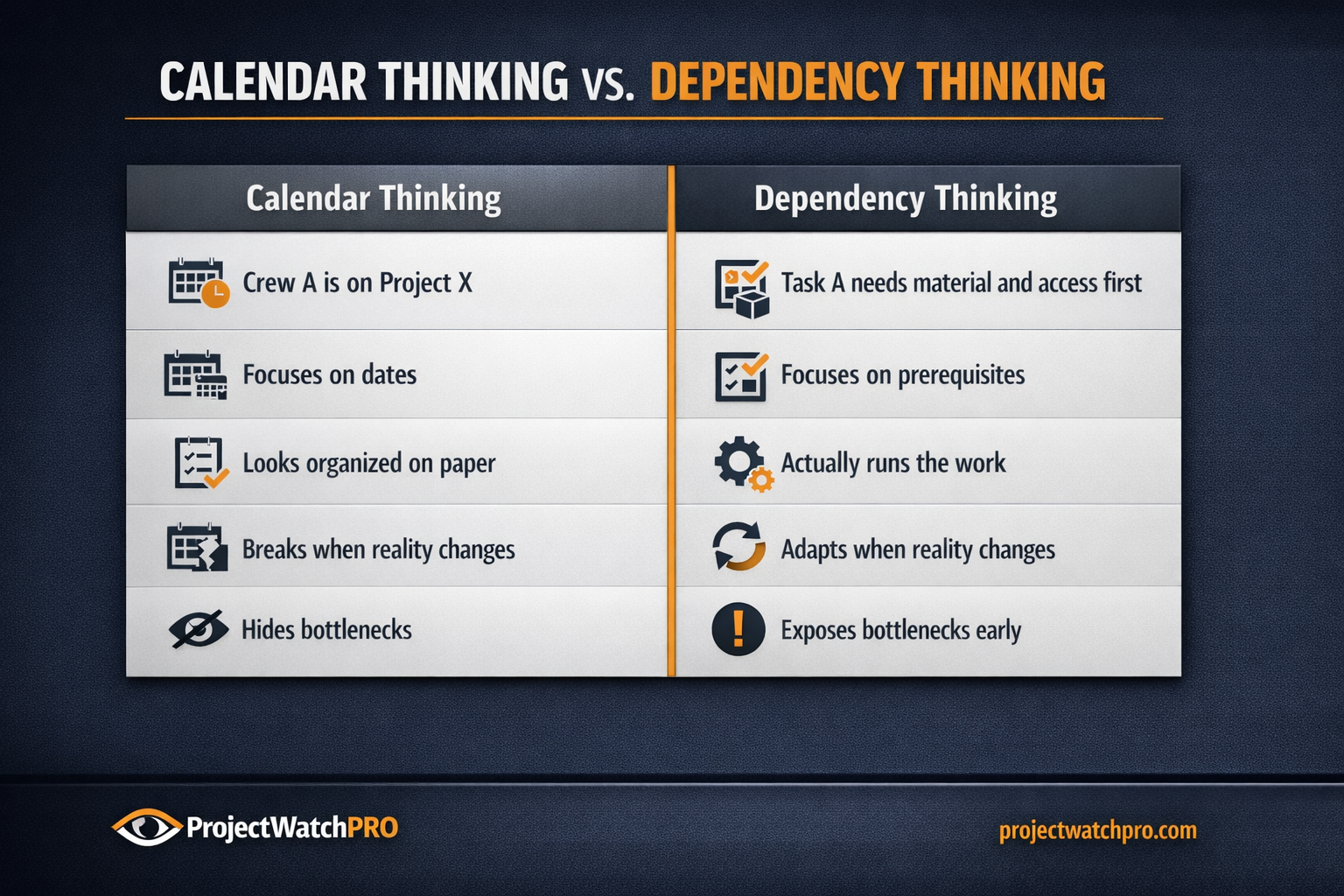
In a multi-crew business, one delay does not stay contained.
That is why the week can look fine on Friday and feel broken by Tuesday.
A material delivery slips.
An inspection gets bumped.
Another trade runs late.
Suddenly one crew is waiting, one crew is rushing, and another crew is working around a problem that should have been prevented in the first place. That pattern shows up across field crews, fabrication, service work, and installation because the system is not built to handle interdependence.
This is where most growing companies get trapped.
They think they have a scheduling problem.
What they really have is a dependency visibility problem.
They are trying to manage a chain reaction with a calendar.
They are trying to coordinate a system with a list.
And that is why the chaos feels constant.
The schedule is not a calendar. It is a dependency chain.
The Hidden Cost of Waiting, Handoffs, and Almost-Ready Jobs
This is how margin disappears quietly.
Not in one giant disaster.
In small moments.
A crew arrives and waits.
Then gets reassigned.
Then another task gets bumped.
Then equipment gets moved.
Then Friday overtime gets approved to catch back up.
That is not just inconvenience.
That is hidden cost.
An almost-ready job is one of the biggest causes of this. It looks startable on paper, but it is missing one or more prerequisites in the real world. The crew is present, but the work cannot flow. In that situation, paid labor is active, but productive progress is not.
Plain-English definition:
An almost-ready job is work that looks schedulable on paper but is missing what it needs to start cleanly in reality.
That missing prerequisite might be:
material
access
inspection
equipment
another trade finishing first
the right crew or skill
And when that prerequisite is missing, the schedule starts lying.
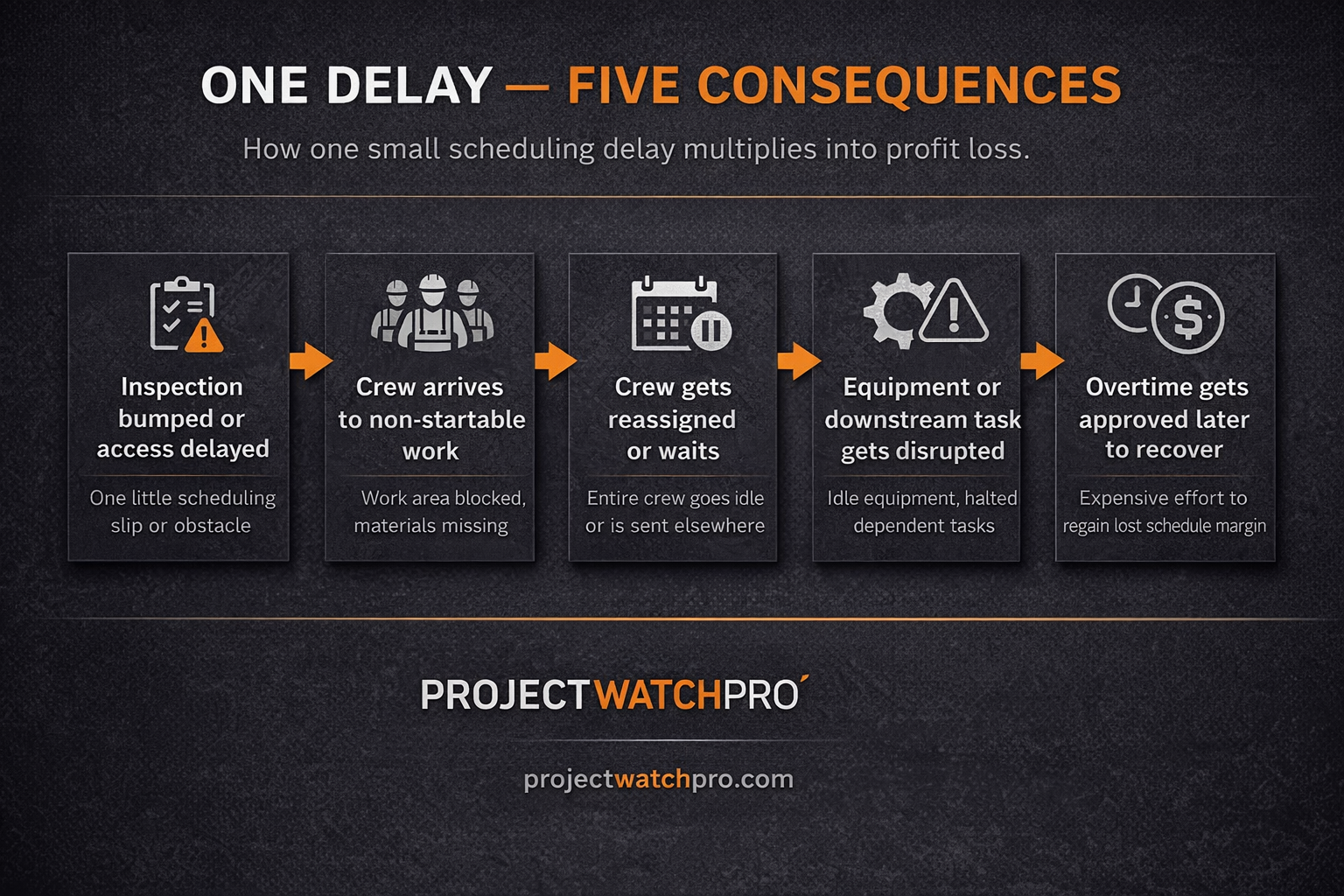
Calendar Scheduling vs. Dependency Scheduling
A lot of schedules look organized.
That does not mean they run the work.
Calendar thinking says:
Crew A is on Project X.
Dependency thinking says:
Task A needs material, access, equipment, and the previous step completed before it can start.
That is the difference.
One looks neat in a meeting.
The other survives contact with reality.
The blog makes this contrast directly:
calendar thinking focuses on dates
dependency thinking focuses on prerequisites
calendar thinking looks organized
dependency thinking actually runs work
calendar thinking breaks when reality changes
dependency thinking adapts when reality changes
calendar thinking hides bottlenecks
dependency thinking exposes bottlenecks early
And if you cannot see that chain clearly, you are not actually scheduling work.
You are just reacting to whatever breaks next.
Schedule Work, Not Jobs
This is the shift that fixes scheduling chaos.
Most companies schedule jobs.
That sounds normal.
It is also the problem.
Because jobs do not consume time.
Tasks do.
A job is too broad.
Too vague.
Too blended.
Inside one job are multiple tasks:
different materials
different access needs
different tools
different timing
different dependencies
different handoffs
When all of that gets collapsed into one blob on the calendar, crews show up to work that only looks ready.
That is why blocked work keeps getting mislabeled as slow crews.
The issue is often not labor efficiency.
The issue is that the work was never properly sequenced in the first place. In the manuscript example, electrical rough-in looked like one three-day block on paper, but in reality it included conduit, wire, boxes, panels, and inspections, each with different requirements and timing.
That is why the rule matters:
You stop scheduling jobs.
You start scheduling tasks.
The Startable Work Check
This is the merged framework.
Not a giant scheduling system.
Just one operating habit that forces reality into the schedule before labor gets sent into the field.
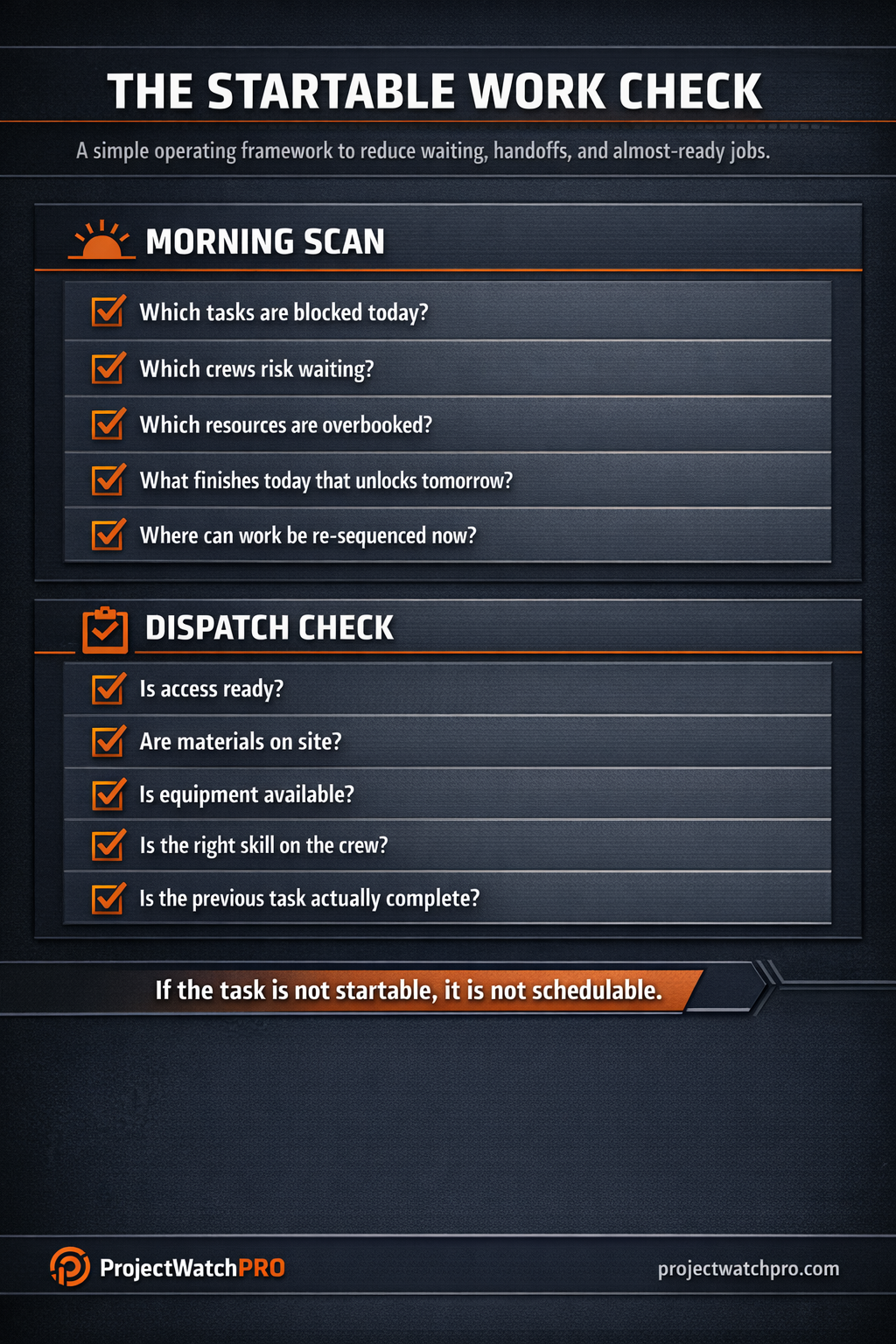
Part 1: Morning Scan
Before the day gets rolling, ask:
Which tasks are blocked today?
Which crews are at risk of waiting?
Which resources are overbooked?
What finishes today that unlocks tomorrow?
Where can work be re-sequenced right now?
Part 2: Dispatch Check
Before a crew leaves, confirm:
Is access ready?
Are materials on site?
Is the required equipment available?
Is the right skill on the crew?
Is the previous task actually complete?
The rule
If the task is not startable, it is not schedulable.
That line is the practical expression of the chapter’s operating shift: If it can’t be started, it doesn’t get scheduled.
This matters because crews are often not behind.
They are blocked.
Blocked by materials.
Blocked by access.
Blocked by inspections.
Blocked by equipment.
And none of that shows up when the schedule only knows the name of the job.
The Task Card Method
Once you stop scheduling jobs, you need a better unit of planning.
That unit is the task.
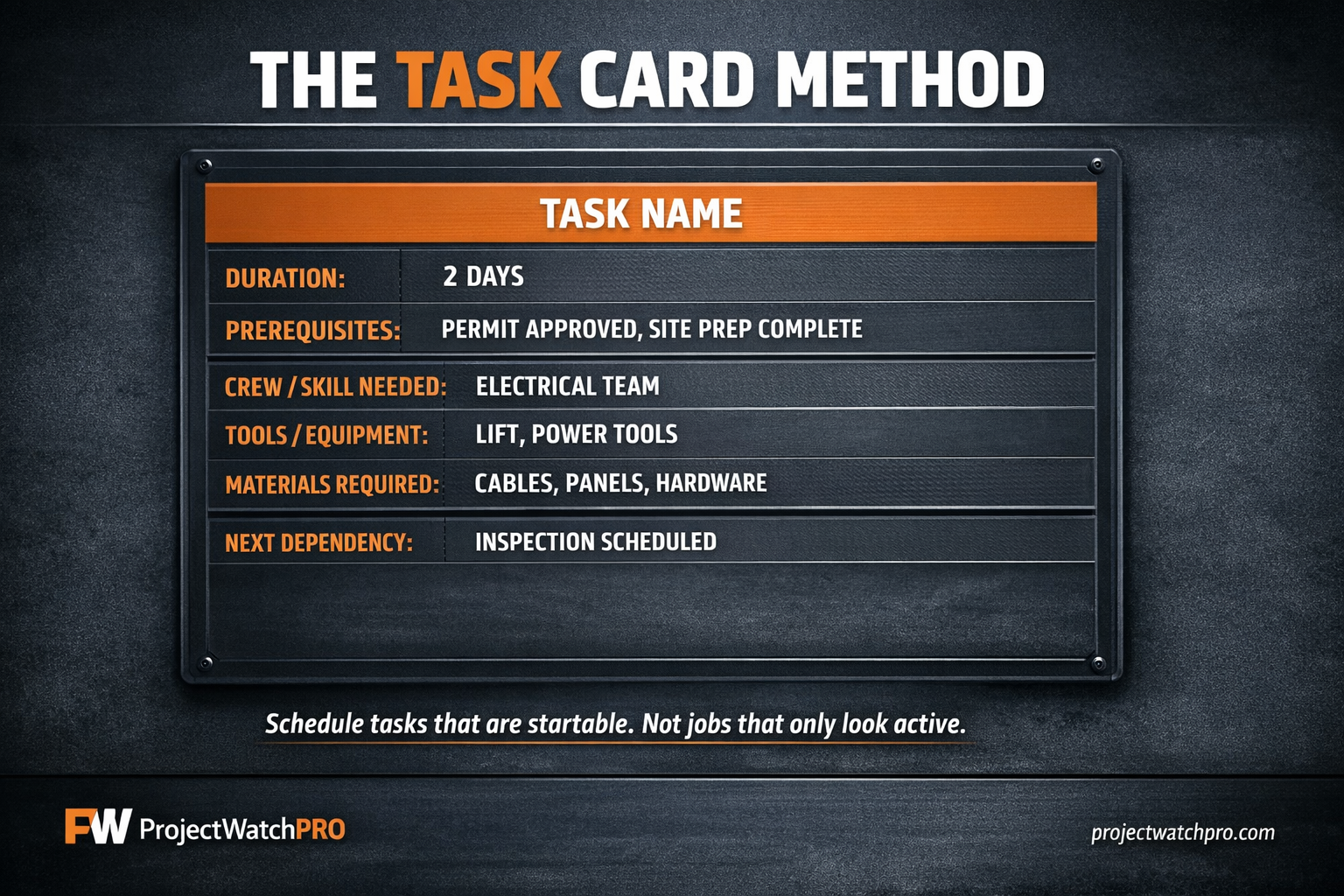
The chapter describes this through task cards. Not software. Not bureaucracy. Just a simple way to define work clearly enough that it can actually flow.
Every task should define:
task name
duration
prerequisites
crew or skill needed
tools or equipment
materials required
next dependency unlocked
This changes the conversation.
Instead of:
Crew A is on Project X
You get:
Conduit install — 8 hours — requires material delivery — requires access — requires inspection booked.
One is a guess.
The other is a plan.
And that one shift exposes why the schedule keeps breaking:
the job is not late
a prerequisite is missing
the crew is not inefficient
they are waiting
the equipment is not overbooked
it is being scheduled blind
What Changes When You Do This
This does not make reality predictable.
It makes reality manageable.
That is the real difference.
Delays still happen.
But they stop multiplying.
Overtime does not disappear.
But it becomes planned instead of panicked.
Idle time does not vanish.
But it stops surprising people.
The chapter’s outcome is simple: the system did not make reality predictable. It made it manageable. And the real breakthrough was not better plans. It was faster, safer adjustments.
That is why this matters.
A real scheduling system does not pretend delays will not happen.
It makes sure they do not multiply.
Six months in, the manuscript example shows the result:
phones were quieter
crews knew where they were going and why
overtime became the exception, not the rescue plan
projects stopped finishing in frantic bursts
You do not eliminate chaos.
You contain it.
Where ProjectWatchPRO Fits In
A framework like this does not replace visibility.
It depends on it.
Because once you start asking better scheduling questions, you need faster answers.
You need to know:
what is actually ready
where labor is going
when schedules change
whether cost is drifting while work is still live
which tasks are blocked before they turn into overtime
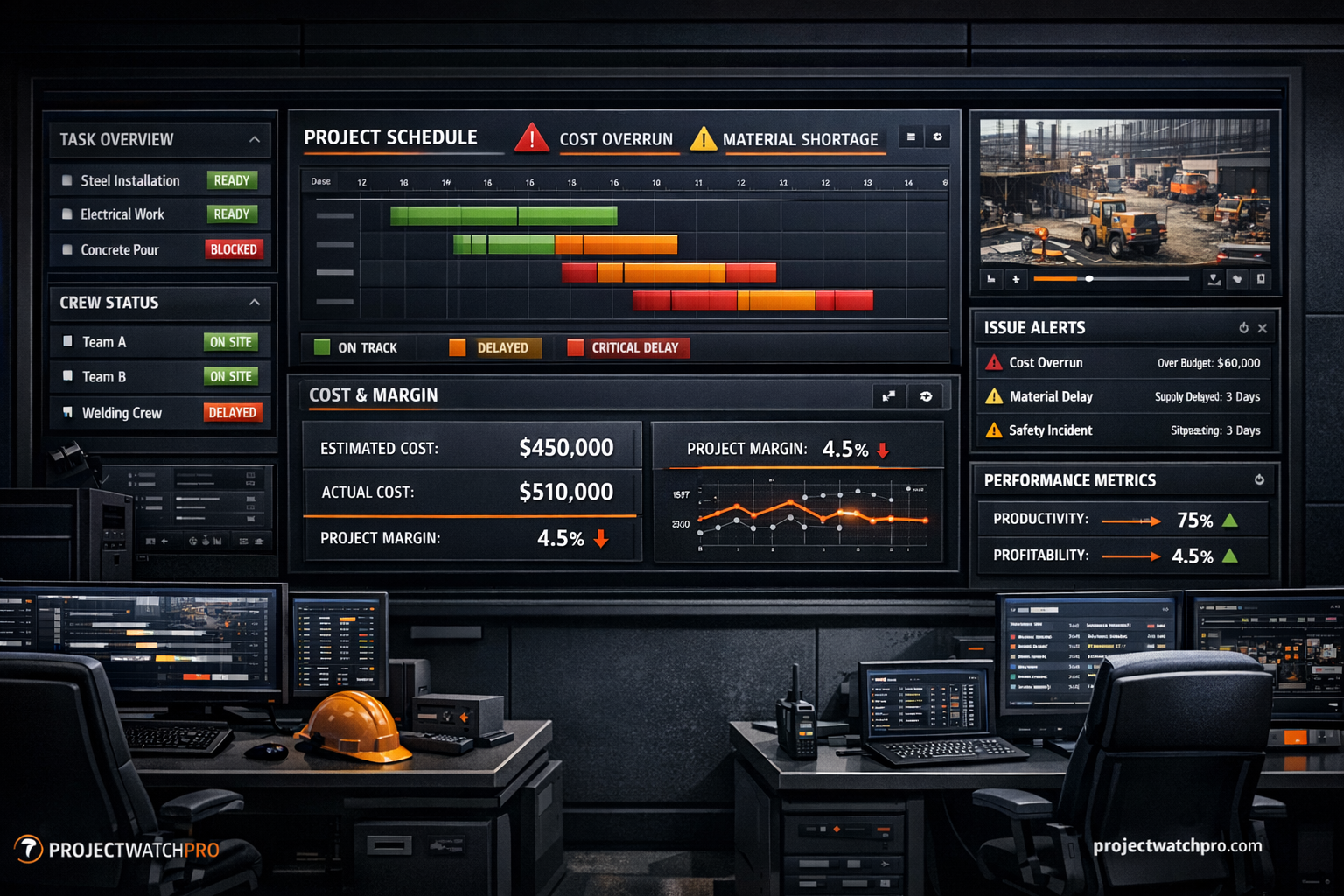
That is where ProjectWatchPRO fits.
Your broader messaging consistently positions ProjectWatchPRO as a real-time profit defense platform that helps project-driven companies see job cost, scheduling, field activity, and margin while work is still happening instead of discovering the problem after the fact.
That matters because delayed information creates delayed decisions.
And delayed decisions cost money.
You cannot defend profit in real time if the schedule is lying to you in real time.
Key Takeaways
Scheduling chaos is usually a dependency visibility problem, not just a calendar problem.
An almost-ready job is one of the biggest hidden causes of idle labor and overtime.
Jobs are too broad to schedule well. Tasks are the real unit of execution.
Crews are often blocked, not inefficient.
If the task is not startable, it is not schedulable.
The goal is not to eliminate every delay. The goal is to stop delays from cascading.
FAQ
What causes scheduling chaos in construction?
Usually not bad effort. It usually starts when work is scheduled before prerequisites like material, access, inspections, equipment, or prior tasks are actually ready.
What is an almost-ready job?
An almost-ready job is work that appears ready on paper but is missing one or more things required to start cleanly in reality.
What is the difference between scheduling jobs and scheduling work?
Scheduling jobs treats a whole project or phase like one block of time. Scheduling work breaks execution into real tasks with prerequisites, timing, crew needs, and dependencies.
Why do crews wait even when the schedule looks full?
Because the calendar can be full while tasks are still blocked. A full schedule is not the same as startable work.
What is dependency scheduling?
Dependency scheduling focuses on what must be true before a task starts and what that task unlocks next. It is built around flow, not just dates.
Can software fix scheduling chaos by itself?
No. The operating habit has to change too. Software helps by making tasks, readiness, cost, and changes visible fast enough to act on.
Conclusion
You do not fix scheduling chaos by pushing harder.
You fix it by getting more honest about what work is actually ready to start.
That means:
stop scheduling blobs
stop trusting paper readiness
stop sending labor into blocked work
stop confusing a full calendar with productive flow
Schedule the work.
Not the job.
That is how you contain the chaos before it turns into waiting, overtime, and profit loss.


